

Introduction
For modern farms, reducing input waste in precision farming is becoming a key part of improving operational efficiency.
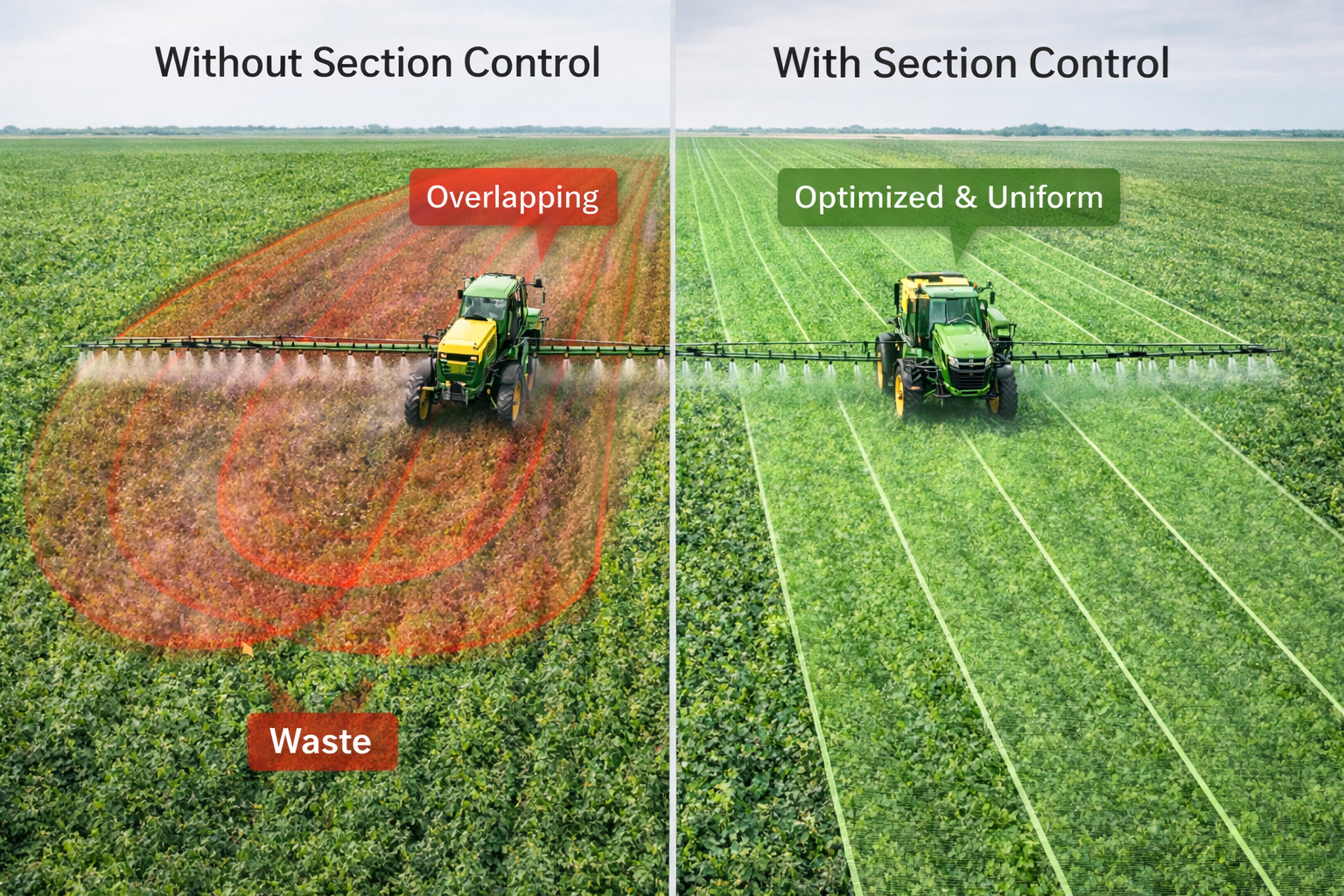
Overlapping application of seeds, fertilizer, or chemicals happens more often than many operators realize. It typically occurs in irregular fields, during turning, or when multiple passes are slightly misaligned. While each instance may seem minor, the cumulative impact across a full season can significantly reduce profitability.
For farms aiming to improve efficiency, reducing overlap is no longer optional. It has become a core part of operational optimization.
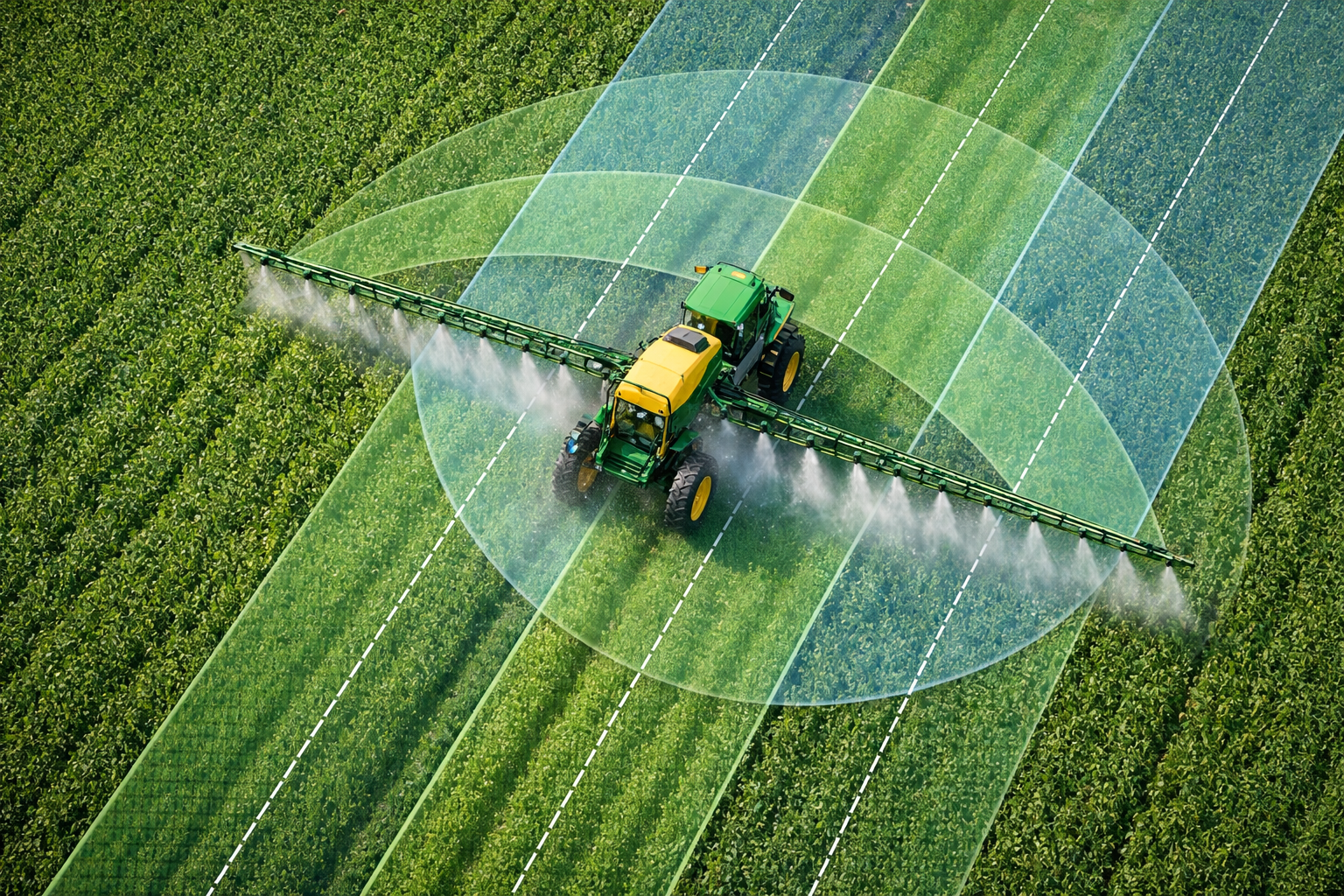
Why the Conventional Approach Leads to Waste
Even with experienced operators, traditional workflows still rely heavily on manual judgment during field operations.
This becomes problematic in several common scenarios:
- Irregular field boundaries where straight-line passes are difficult to maintain
- Headlands and turning zones where overlap is almost unavoidable
- Night operations or low-visibility conditions
- Fields requiring repeated passes for different inputs
In these conditions, operators often apply more than necessary, not because of poor practice, but because they lack precise control at the section level.
Over time, this leads to:
- Increased input costs
- Uneven crop growth
- Reduced yield consistency
- Higher environmental impact
A Better Workflow Logic for Reducing Overlap in Farming
Instead of focusing on driving precision alone, a more effective approach is to control where inputs are applied and where they are not.
This requires a shift in workflow logic:
From: keeping the machine on track
To: controlling application zones dynamically
The key idea is simple:
Apply inputs only where needed, and automatically stop where coverage already exists.
This is where section-level automation becomes critical.
Key Execution Steps
1. Define Field Boundaries Accurately
Before any operation begins, make sure that field boundaries are clearly mapped.
- Import or create boundary data
- Verify edges, irregular shapes, and obstacles
- Ensure compatibility with the guidance system
Accurate boundaries are the foundation of any section control workflow.
2. Enable Section-Based Control Logic
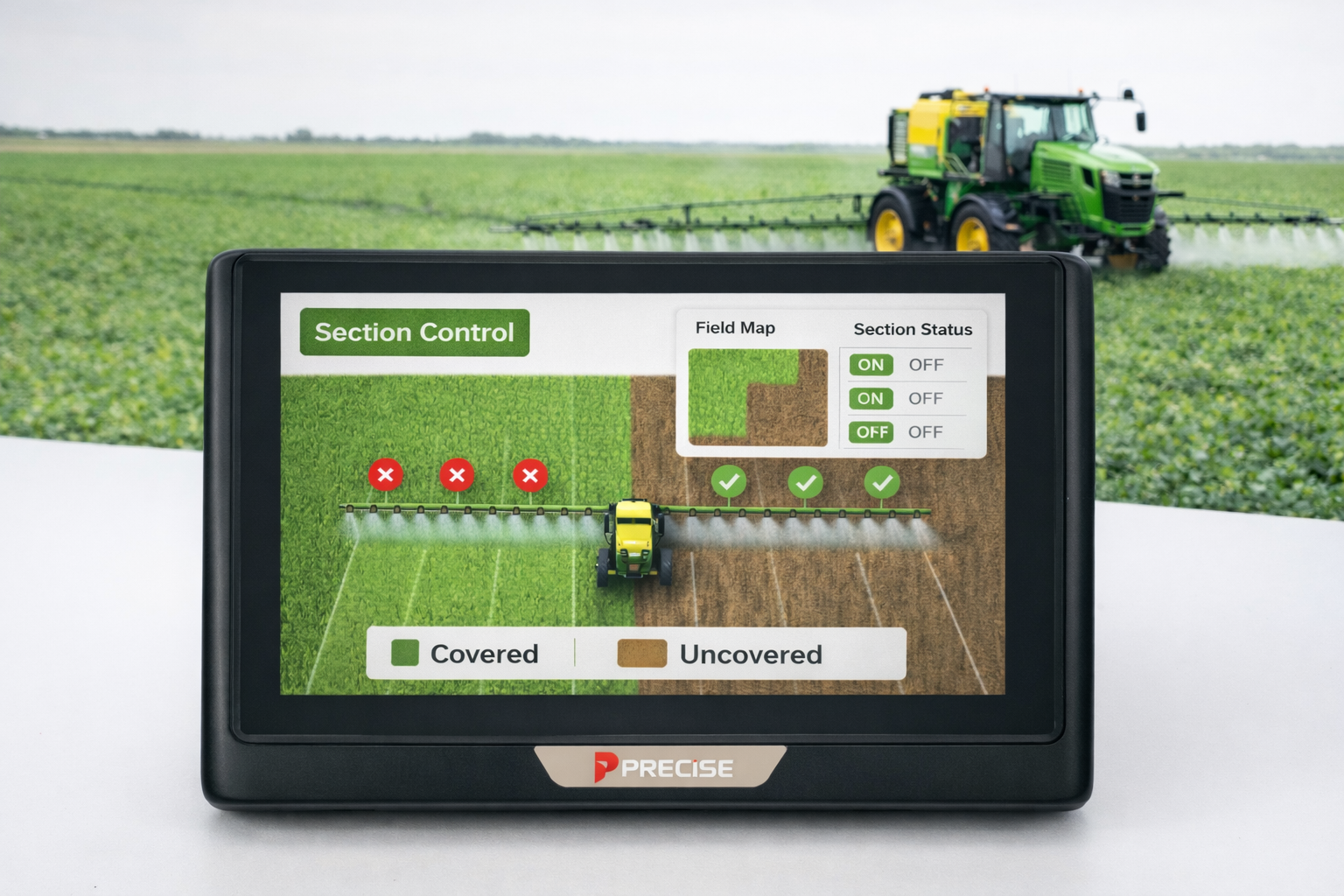
Instead of treating the implement as a single unit, divide it into multiple controllable sections.
- Each section operates independently
- Application is controlled based on position
- Overlap zones are automatically detected
This allows real-time decision-making during operation without relying on operator reaction.
3. Automate Application Cut-Off in Overlap Areas
During operation:
- When a section enters an already covered zone, it automatically shuts off
- When it enters an untreated area, it resumes application
This happens continuously and instantly, especially in:
- Headlands
- Curved paths
- Partial overlaps
The result is a more consistent application pattern without manual intervention.
4. Optimize Turning and Headland Efficiency
Turning areas are where most waste typically occurs.
With automated section control:
- Input application is minimized during turns
- Re-entry into the field is smoother
- There is no need to guess when to restart application
This significantly reduces over-application in critical zones.
5. Monitor and Adjust in Real Time
Even with automation, monitoring remains important.
Operators should:
- Check coverage maps during operation
- Verify section response timing
- Ensure GNSS accuracy remains stable
This helps ensure the system performs as expected under real field conditions.
What Affects Input Efficiency in Large Fields
While section control improves efficiency, several factors influence how effective it will be:
GNSS positioning accuracy
Reliable positioning is essential for correct section activation.
Boundary data quality
Poorly defined boundaries lead to incorrect application zones.
Implement configuration
Section width and response time must match the actual equipment setup.
Field conditions
Slopes, obstacles, and irregular terrain can affect system performance.
Maintaining these conditions helps ensure more consistent results.
Why This Workflow Fits Modern Farming Operations
In high-efficiency farming environments, reducing waste is just as important as increasing productivity.
A system like the PRECISE A Pro integrates:
- Autosteer guidance
- ISOBUS compatibility
- Section control automation
into a single workflow.
This allows operators to move beyond basic guidance and focus on application precision at the input level, where real cost savings occur.
Instead of relying on operator timing, the system continuously adjusts application based on actual field coverage, making operations more consistent and less dependent on manual control.
Conclusion
Reducing overlap is not just about driving more accurately. It is about applying inputs more intelligently.
By shifting to a section-controlled workflow:
- Input waste is reduced
- Field consistency improves
- Operator workload decreases
In precision farming, small efficiency gains across large areas can translate into measurable results.
Controlling overlap is one of the most direct ways to achieve that.