Introduction
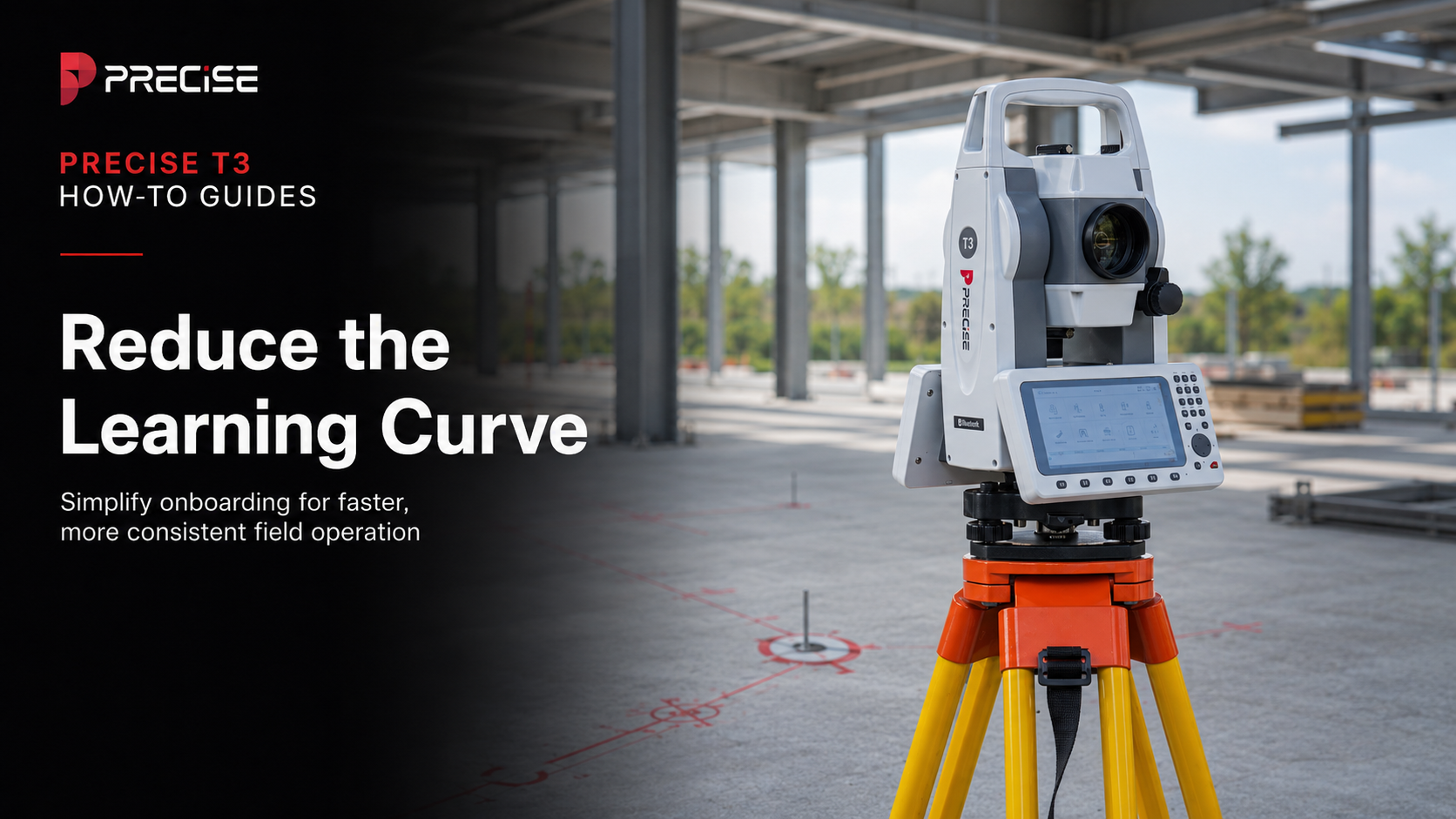
Total station operator learning curve is a key factor in construction surveying Total station operator learning curve is a key factor in construction surveying efficiency, especially when teams need new operators to become productive quickly without compromising workflow quality.
In construction surveying, efficiency is not only determined by equipment. It is also shaped by how quickly operators can become productive.
On many job sites, teams face a common challenge:
- New operators require time to adapt
- Workflow consistency varies between individuals
- Training slows down project momentum
- Field confidence takes time to build
This creates a practical constraint:
How can teams reduce the learning curve for total station operators without compromising accuracy and workflow quality?
Why Total Station Learning Curves Slow Down Teams
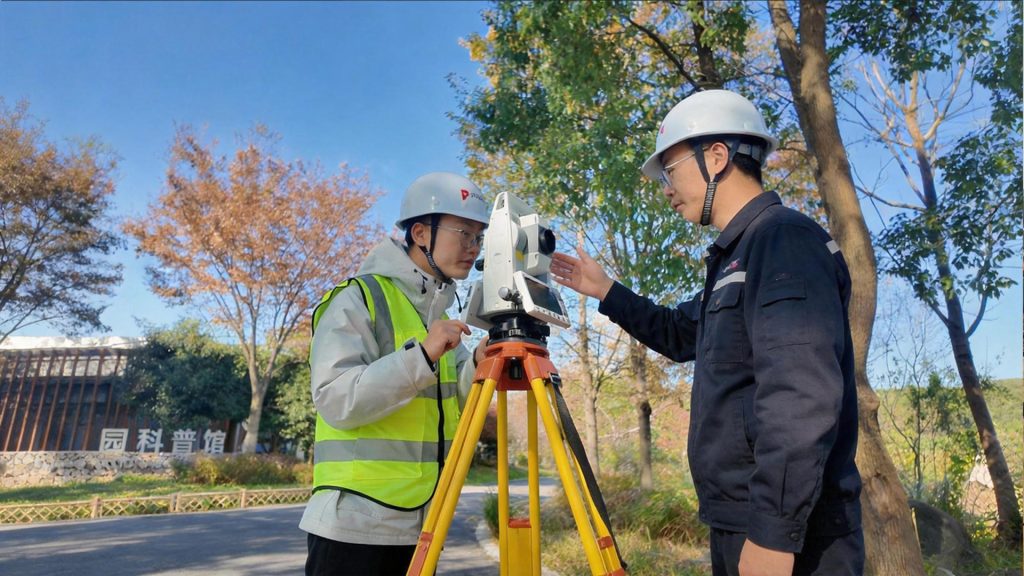
Traditional total station systems were often designed for experienced users.
As a result, they may present challenges for new operators, especially in fast-moving construction environments.
Common issues include:
Complex Operation Logic
Multi-layered menus, unfamiliar interfaces, and complicated workflows can slow down understanding.
When operators spend more time figuring out the system, less time is spent completing field tasks.
High Dependency on Training
Some workflows require operators to memorize procedures instead of intuitively following them.
This increases training time and makes it harder for new users to become productive quickly.
Inconsistent User Experience Across Devices
Switching between different systems, controllers, or software platforms can increase confusion.
When each tool follows a different logic, operators need more time to adapt.
Delayed Confidence in Field Decisions
New operators may hesitate, double-check frequently, or slow down execution because they are unsure whether each step is correct.
These issues affect not only individual performance.
They also influence team-wide efficiency, workflow consistency, and project progress.
A More Accessible Workflow Logic
Reducing the learning curve is not about simplifying surveying tasks to a lower standard.
It is about making professional workflows easier to understand, repeat, and execute.
A more accessible approach focuses on three principles:
1. Use Familiar Interaction Patterns
Operators can learn faster when the system follows interaction logic they already understand.
A familiar interface reduces the need for specialized training and helps users move through tasks more naturally.
2. Keep Workflows Visually Clear
Clear visual guidance helps operators understand what to do next without overthinking each step.
This reduces hesitation and improves confidence during field execution.
3. Standardize Operation Logic Across Tasks
When different tasks follow consistent operation patterns, users can apply what they learn more easily across different scenarios.
This helps teams move from “learning the system” to executing tasks confidently.
Key Execution Steps to Accelerate Operator Onboarding
1. Start with an Intuitive Interface
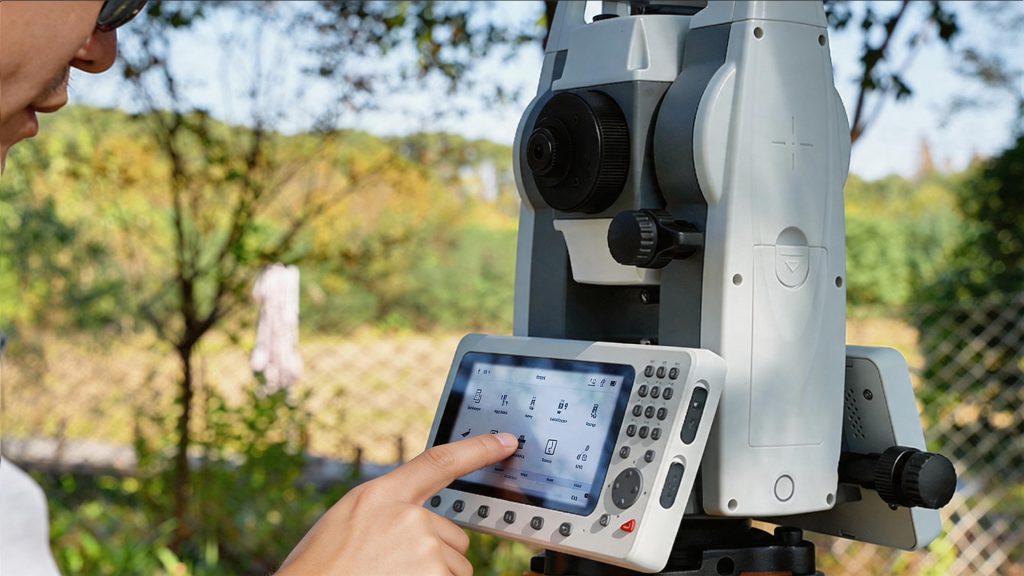
The first barrier for new total station operators is often the interface.
Systems that follow familiar interaction logic — similar to mobile devices — allow operators to:
- Navigate functions more quickly
- Access project data with less confusion
- Understand task flow more easily
- Reduce reliance on manuals or repeated guidance
- Move from setup to execution faster
An intuitive interface shortens the time between first use and effective use.
For construction teams working under tight schedules, this can make onboarding significantly smoother.
2. Reduce Workflow Complexity
Complicated workflows increase the likelihood of mistakes.
They also make it harder for new operators to repeat tasks consistently.
To simplify total station operation, teams should focus on:
- Minimizing unnecessary steps
- Keeping task sequences consistent
- Avoiding repeated data entry
- Reducing switching between multiple tools
- Making common functions easier to access
Simplified workflows make it easier for new operators to follow, repeat, and remember the correct process.
This does not reduce professional standards.
Instead, it helps operators reach those standards more efficiently.
3. Enable Direct Data Handling
Data handling is often one of the most confusing parts of total station operation.
When operators need to transfer files across devices, convert formats, or re-enter data manually, both errors and delays can increase.
Common data-related challenges include:
- Working with outdated files
- Importing the wrong coordinate data
- Misunderstanding file structures
- Re-entering information manually
- Switching between disconnected systems
Using systems that allow direct data access and management on the device reduces this complexity.
It helps operators focus more on the layout task itself and less on managing the workflow around it.
4. Build Confidence Through Immediate Feedback
New operators often hesitate because they are unsure whether their actions are correct.
A more effective workflow should provide clear feedback during operation.
This includes:
- Immediate visual confirmation
- Clear indication of task progress
- Reduced ambiguity during execution
- Easier understanding of point selection and verification
- Faster recognition of the next step
Confidence improves speed.
It also reduces unnecessary rechecking, repeated confirmation, and workflow interruptions.
For new operators, immediate feedback can be the difference between simply following instructions and truly understanding the workflow.
5. Standardize Across the Team
Training becomes more efficient when all operators follow the same workflow logic.
On construction sites with multiple crews or rotating operators, inconsistent operation habits can create delays and variation.
To improve consistency, teams should:
- Use systems with consistent operation patterns
- Avoid mixing multiple incompatible tools
- Establish clear internal workflow guidelines
- Keep data structures and naming rules consistent
- Train operators around repeatable task sequences
Standardization reduces variation and improves overall team performance.
When new operators learn a workflow that is already shared across the team, onboarding becomes faster and more reliable.
What Affects Learning Speed in Practice
Even with optimized systems, several factors influence how quickly operators adapt.
Prior Experience with Similar Interfaces
Operators who are already familiar with mobile-style interaction can often adapt faster to systems with similar logic.
A familiar interface helps reduce the pressure of learning everything from the beginning.
Training Structure and Support
Clear guidance still plays an important role.
A well-structured onboarding process helps operators understand not only which buttons to press, but also why each step matters.
Workflow Complexity on Site
More complex job-site environments may require more adaptation.
Obstructions, limited space, and changing site conditions can make new operators less confident without a clear workflow.
Team Coordination
Consistent practices help new operators learn faster.
When experienced users and new users follow the same process, training becomes easier and less dependent on individual habits.
Understanding these factors helps teams design better onboarding processes and reduce the time needed to reach stable productivity.
Why This Workflow Fits Modern Surveying Teams
Construction teams today need to scale quickly — often under tight timelines.
They need equipment that supports accuracy, but also makes professional operation easier to adopt.
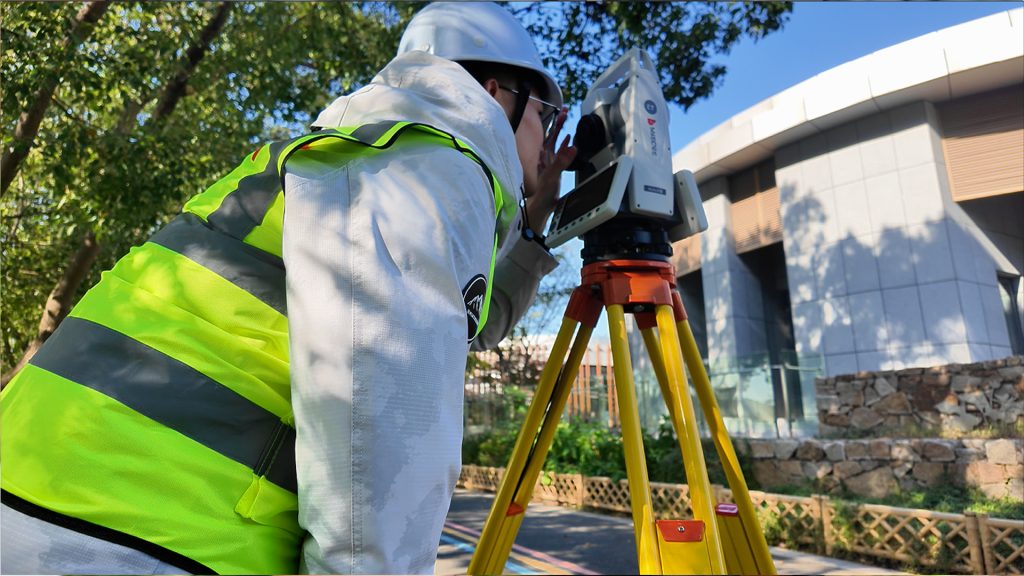
The PRECISE T3 Total Station supports this need by focusing on usability, workflow clarity, and practical field operation.
Key advantages include:
- Android-based open system
Provides a familiar interaction environment for most users. - Integrated interface and workflow
Reduces the need to switch between multiple devices or systems. - Clearer operation logic
Helps operators understand and repeat workflows more easily. - Practical field-oriented design
Supports faster onboarding and more consistent team performance.
By reducing unnecessary complexity, PRECISE T3 helps operators become productive with less training while maintaining workflow quality.
This makes it easier for teams to onboard new users, standardize field practices, and keep construction surveying work moving efficiently.
Conclusion
Reducing the learning curve in total station operation is not about lowering standards.
It is about making efficient workflows easier to adopt.
By simplifying interaction, standardizing processes, and improving feedback, teams can:
- Accelerate operator onboarding
- Reduce training time
- Improve field confidence
- Maintain consistency across crews
- Support more reliable construction surveying workflows
In modern construction surveying, the most effective systems are those that enable people to perform well — quickly and reliably.