

Introduction
In conConstruction surveying collaboration depends on how well teams share data, coordinate tasks, and maintain consistent workflows across the entire project.
In construction surveying, efficiency is not only determined by individual performance. It is shaped by how well teams share data, coordinate tasks, and maintain consistency across the entire project.
As project scale increases, so do the challenges:
- Multiple operators working simultaneously
- Data moving between teams and devices
- Increased risk of misalignment and duplication
- More pressure on project managers and survey leads
This leads to a critical question:
How can surveying teams improve collaboration and data flow without adding complexity to the workflow??
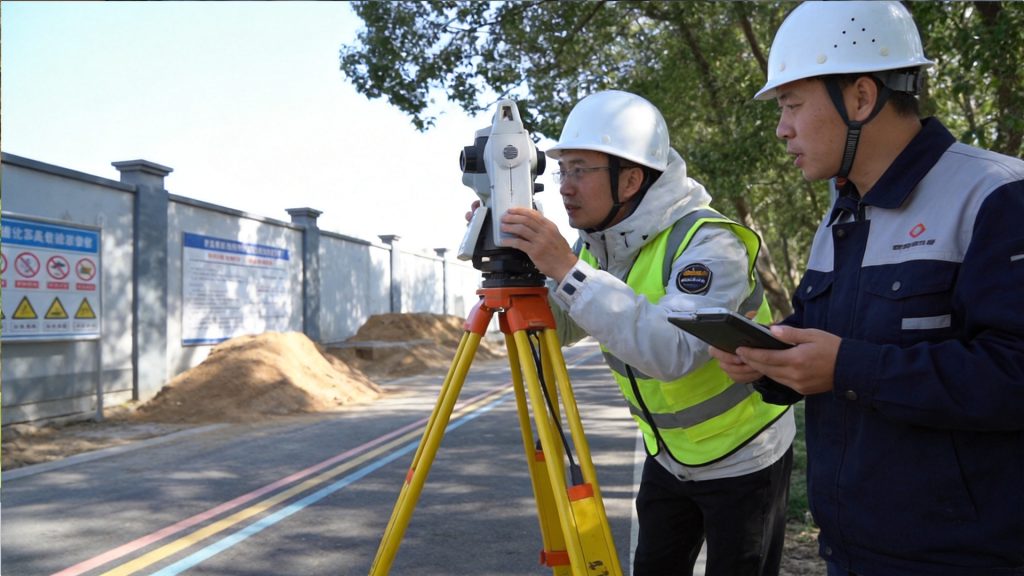
Why Collaboration Breaks Down in Surveying Workflows
Even with accurate instruments, collaboration issues can significantly impact project efficiency.
Common problems include:
Disconnected Data Environments
When files are transferred manually across devices, the risk of version mismatch increases.
Different operators may unknowingly work with outdated files or inconsistent coordinate data.
Inconsistent Workflows Between Operators
Different teams may follow different procedures.
This can lead to variation in results, repeated checks, and reduced confidence in the final output.
Limited Real-Time Coordination
When data synchronization is delayed, decision-making slows down.
Project managers and survey leads may not have a clear view of field progress or completed work.
Redundant Work and Rechecking
Lack of visibility often leads to repeated measurements or unnecessary verification.
Teams may spend time checking work that has already been completed simply because the information is not easy to access.
These issues are not caused by measurement tools alone.
They are caused by workflow fragmentation at the team level.
A More Connected Workflow Logic
Improving collaboration requires a shift from isolated operations to a connected workflow system.
A more effective approach focuses on three principles:
1. Centralized Data Access
All team members should work from the same data source whenever possible.
This helps reduce confusion, prevent version mismatch, and keep field teams aligned.
2. Consistent Workflow Structure
Standardizing how common tasks are performed across operators helps reduce variation.
When teams follow the same workflow logic, results become more consistent and easier to manage.
3. Seamless Data Flow Between Stages
Surveying data moves through multiple stages — preparation, fieldwork, verification, processing, and delivery.
Reducing friction between these stages helps improve overall project turnaround.
This transforms surveying from a series of individual tasks into a coordinated team process.
Key Execution Steps to Improve Collaboration Efficiency
1. Establish a Unified Data Structure
Before fieldwork begins, teams should define how project data is organized and shared.
This includes:
- Consistent naming conventions
- Standardized coordinate systems
- Clear project file structure
- Unified point naming rules
- Version control for design and layout files
A unified data structure reduces confusion and ensures that all team members interpret information in the same way.
When the data structure is clear, operators can spend less time confirming files and more time executing field tasks.
2. Enable Direct Data Access Across Devices
When data must be repeatedly transferred between devices, errors and delays increase.
Common issues include:
- File version mismatch
- Manual transfer mistakes
- Duplicate project files
- Delayed access to updated data
- Reduced confidence in data consistency
Using systems that support direct data access and management helps improve coordination between team members.
This allows crews to:
- Keep operators aligned
- Reduce manual transfer steps
- Maintain workflow continuity
- Improve confidence in shared project data
- Reduce unnecessary data-related interruptions
For larger construction projects, smoother data access can significantly improve team efficiency.

3. Standardize Operational Workflows
Differences in how operators perform tasks can lead to inconsistent results.
Even when using the same instrument, different working habits may create variation in execution.
To improve consistency, teams should:
- Define clear workflow steps for common tasks
- Use systems with intuitive and repeatable operation logic
- Ensure all team members follow the same approach
- Reduce unnecessary manual operations
- Align data handling, point selection, and verification methods
Standardization improves both efficiency and reliability.
It also makes it easier for new operators to join the workflow without creating additional coordination problems.
4. Reduce Redundant Work Through Better Visibility
Lack of visibility often leads to duplicated effort.
If completed work is not clearly recorded or accessible, other team members may repeat measurements or spend extra time verifying the same points.
To avoid this, teams should:
- Ensure completed work is clearly recorded
- Make field progress easy to review
- Keep project status visible to relevant team members
- Reduce repeated confirmation caused by unclear records
- Maintain a consistent data trail from fieldwork to output
Better visibility reduces unnecessary re-measurement and improves coordination across crews.
It helps teams understand what has been completed, what still needs attention, and where potential issues may exist.
5. Maintain Continuity from Field to Output
Surveying does not end in the field.
Data continues into processing, verification, documentation, and final project delivery.
A more efficient workflow should support a smooth transition from field data to final outputs.
This means reducing the need for:
- Reformatting data
- Restructuring files
- Re-entering information
- Rechecking data due to unclear field records
- Moving between disconnected platforms
Maintaining continuity from field to output helps reduce delays and improve overall project turnaround time.
For construction surveying teams, this is especially important when multiple stages depend on the same data.
What Affects Collaboration Efficiency in Practice
Several factors influence how well teams collaborate in construction surveying projects.
Project Scale and Complexity
Larger projects require stronger coordination.
As the number of operators, layout tasks, and project files increases, the need for consistent workflows becomes more important.
Data Management Discipline
Even good systems require structured usage.
Clear naming rules, organized files, and consistent data handling practices are still essential.
Team Experience and Communication
Experienced teams may coordinate more naturally, but clear processes reduce reliance on individual habits.
This is especially useful when teams change, expand, or work across different project phases.
Technology Integration Level
Systems that work together reduce friction.
When data, operation, and output workflows are better connected, teams can reduce unnecessary steps and improve project efficiency.
Understanding these factors helps teams design more effective collaboration workflows.
Why This Workflow Fits Modern Surveying Projects
Modern construction projects require connected, scalable workflows — not isolated operations.
The PRECISE T3 Total Station supports this shift by helping teams maintain consistency without adding unnecessary complexity.
Key workflow advantages include:
- Android-based open system
Supports easier integration with different software and workflow environments. - Integrated data handling and operation
Reduces fragmentation between devices, files, and field processes. - Practical field-oriented design
Helps teams maintain consistent operation across different users and job conditions. - Clearer workflow logic
Makes it easier to standardize field tasks and improve team coordination.
This makes it easier to align teams, maintain data integrity, and improve overall project efficiency.
Instead of treating each operator as an isolated workflow, teams can build a more connected process around shared data and consistent execution.

Conclusion
Improving collaboration in construction surveying is not about adding more tools.
It is about making workflows more connected and consistent.
By centralizing data, standardizing processes, and ensuring smooth data flow, teams can:
- Reduce errors caused by misalignment
- Eliminate redundant work
- Improve coordination across operators
- Maintain clearer project data
- Improve field-to-output continuity
- Support more scalable surveying workflows
In modern surveying projects, the most effective workflows are those that connect people, data, and execution into one continuous system.