
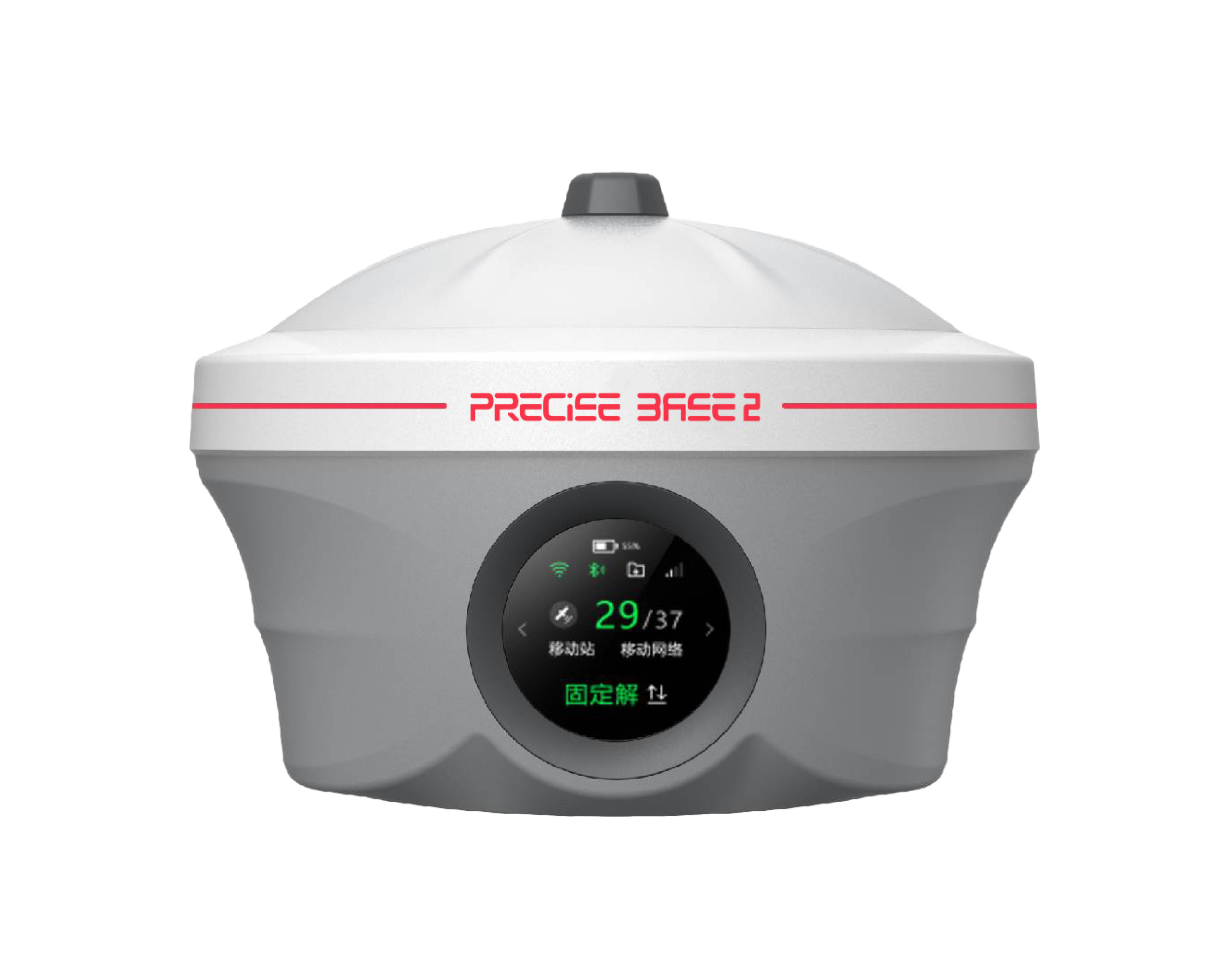
Ultra-portable Long-range GNSS Base Station
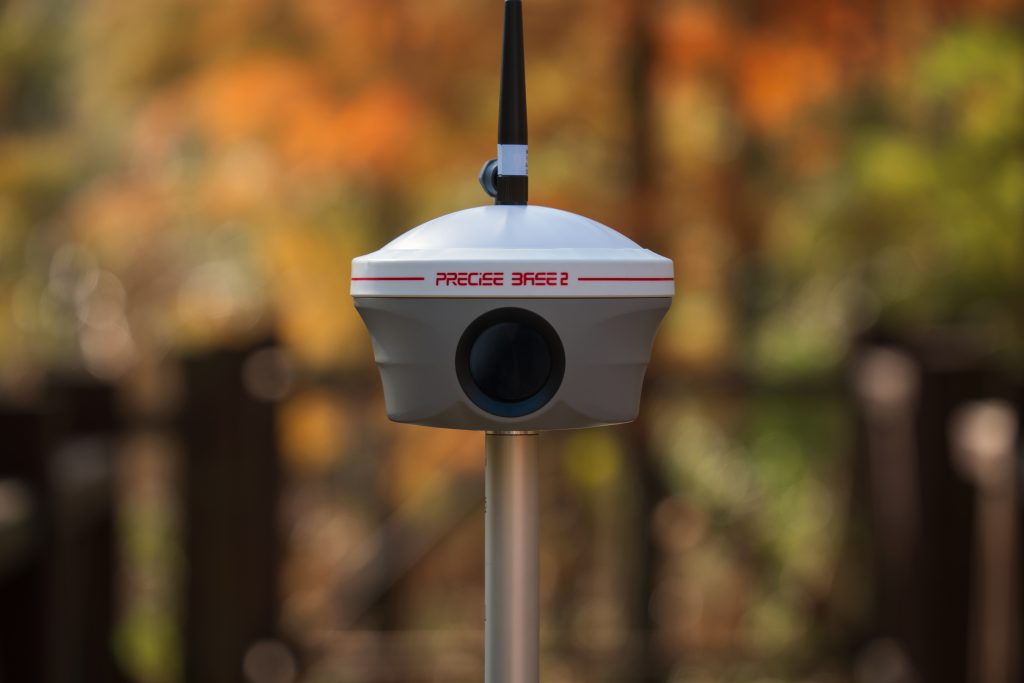
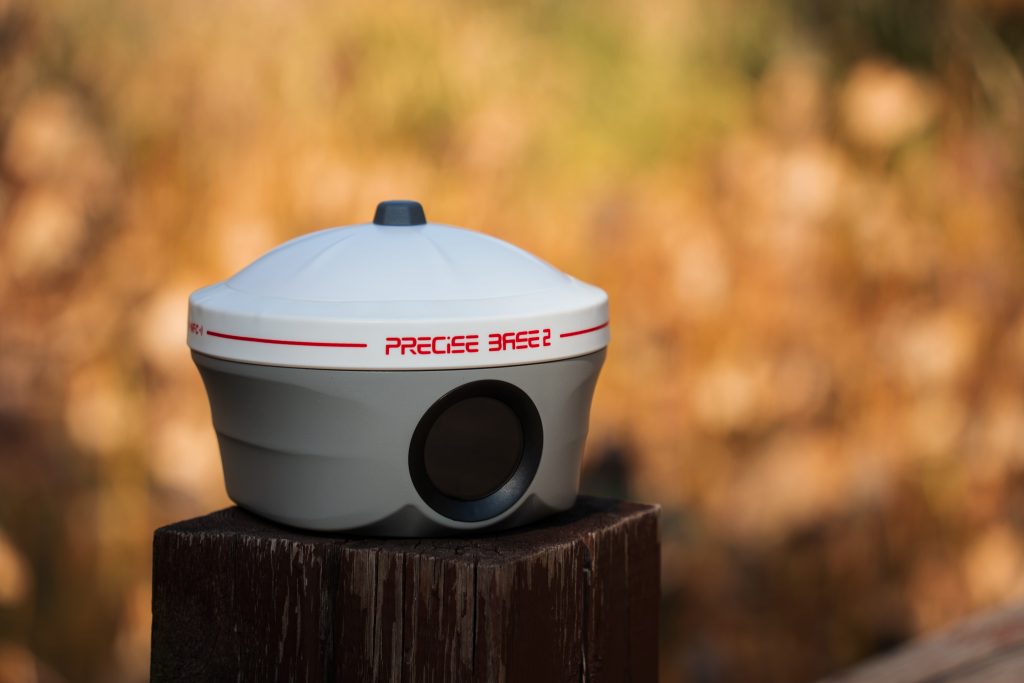
PRECISE BASE2
Long range. Light weight. Zero compromise.

Algorithmic Magic to Enhance ‘Precision, Reliability, and Ease’, for an Exceptional User Experience.
Super-high Fix Rate
99.9%
Our product achieves exceptional positioning accuracy.
On average, only 1 out of every 1,000 positioning attempts,
This precision ensures unparalleled reliability for critical applications.
*Fix rate and accuracy can be affected by external conditions such as multipath, obstacles, satellite geometry, and atmospheric conditions.
1. SPEED
Faster Field Readiness
Start work sooner with a base station engineered to reduce setup time and eliminate unnecessary equipment. Ideal for workflows where every minute saved at setup compounds into meaningful productivity throughout the day.
Integrated Design
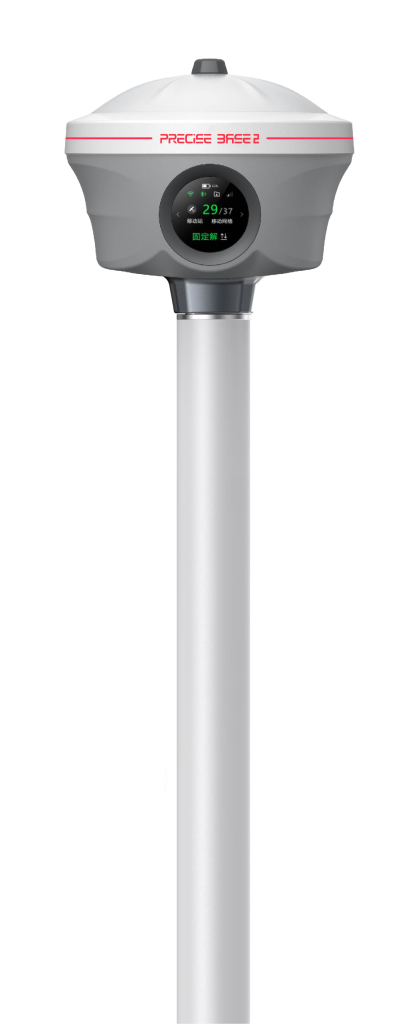
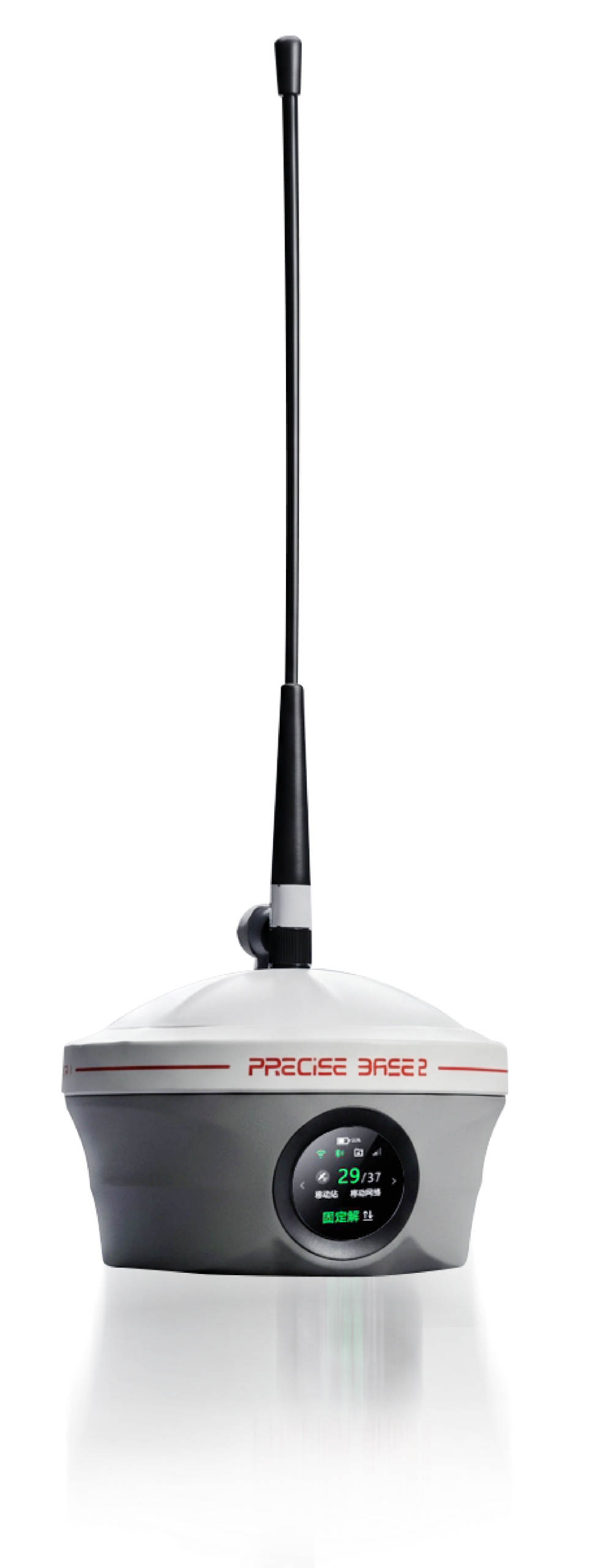
Fully integrated form factor with no external radios or cables
Lightweight Mobility
Over 70% lighter than conventional base-radio configurations
Rapid Deployment
Deployment efficiency improved by up to three times
2. RANGE
Confident Long-Distance Performance
Deliver stable RTK coverage across large and varied environments with powerful long-range radio capability. Built to maintain dependable positioning where distance, terrain, and obstructions typically challenge performance.
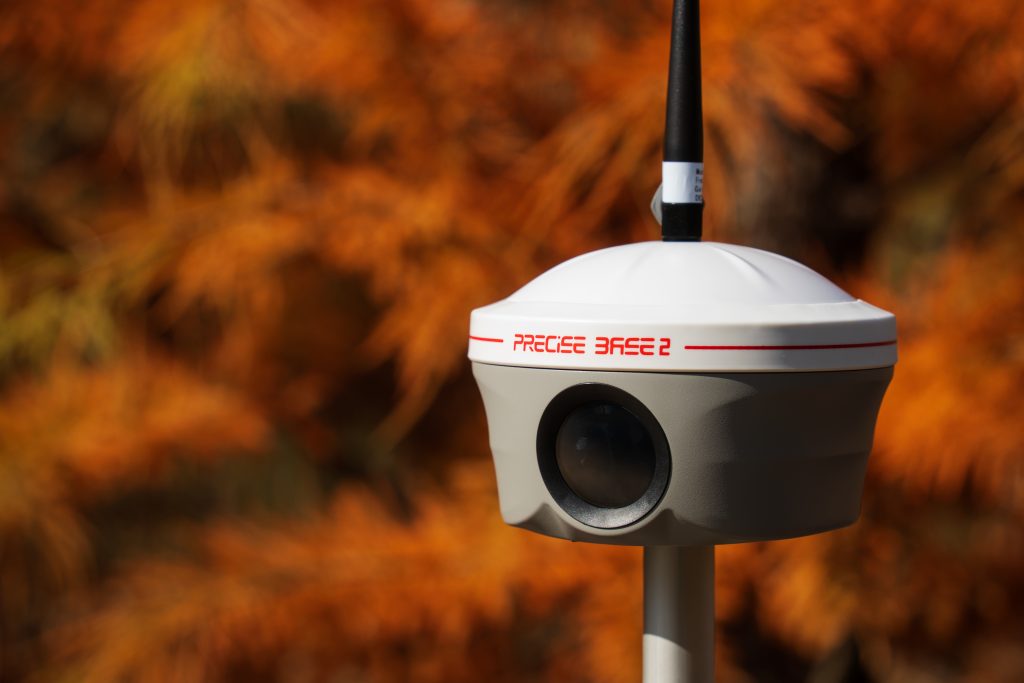
5W FarRadio UHF
Stronger penetration and longer-range signal stability
Extended Coverage
Up to 30 km in open environments with consistent performance
Terrain Adaptability
Robust behaviour across suburban, mixed, and uneven terrain
Reliable Links
Engineered to hold FIX where conventional radios begin to weaken

3. ENDURANCE
All-Day Operational Stability
Sustain uninterrupted productivity with an energy-optimized architecture designed for full-day use. A dependable power foundation that removes the need for mid-day exchanges or external power systems.
12-Hour Runtime
Continuous RTK operation that lasts an entire workday
Power Efficiency
Low-consumption UHF design optimized for long sessions
Zero Interruptions
No spare batteries or external power cables required
4. DURABILITY
Built for Demanding Sites
Perform with confidence in environments where equipment must withstand the unexpected. Engineered to endure weather, impact, vibration, and interference—so reliability remains constant even when conditions do not.
IP67 Protection
Fully sealed against water, dust, and environmental exposure
Magnesium-Alloy Body
Strong yet lightweight structural durability
Impact Resistance
Tested to withstand a 2-meter drop onto hard surfaces
Advanced GNSS Engine
1608-channel multi-constellation tracking with anti-multipath
Interference Self-Test
Identifies cleaner UHF channels for more stable FIX results

Detail Specification
GNSS
| Channels | 1608 channels |
| GPS | L1C/A/L2P(Y)/L2C/L5 |
| GLONASS | L1, L2 |
| BEIDOU | B1i, B2i, B3i, B1C, B2a, B2b |
| GALILEO | E1, E5a, E5b, E6 |
| QZSS | L1, L2, L5, L6 |
| SBAS | L1 |
| NavIC | L5 |
| Output frequency | Up to 50Hz |
| Operating System | Linux |
| Initialization time | <5s(typical) |
| Initialization reliability | 99.99% |
| Static H | ±(2.5mm+0.5*10-6*D) |
| Static V | ±(5mm+0.5*10-6*D) |
| RTK H | ±(8mm+1.0*10-6*D) |
| RTK V | ±(15mm+1.0*10-6*D) |
IMU feature
| IMU | Support |
| IMU accuracy | Accuracy within 60° <2cm |
| IMU tilt angle | 0°~120° |
Data format
| Differential Format | RTCM2.X、RTCM3.X |
| GPS Output Format | NMEA 0183、Binary code |
Function
| Voice | Support |
| Tilt survey | Support |
| PPK survey | Support |
| Buzzer | Support |
| NFC | NFC flash link |
COMMUNICATION
| I/O Interface | 1 USB Type-C, supports charging 1 TNC radio antenna interface 1 five-pin Lemo interface (9V–14V) 1 NanoSIM card socket 1 button |
| Wireless Communication | Supports Bluetooth, handheld 4G, |
| Built-in Network | Wi-Fi, built-in 4G-LTE, WEB LTE-TDD B38/B40/B41 LTE-FDD B1/B3/B5/B7/B8/B20 UMTS/HSPA+ B1/B8 GSM/GPRS/EDGE 900/1800 MHz |
| Built-in Radio Power | Universal transceiver radio + Lora (5W) |
| Built-in Radio Frequency | 410-470MHZ |
| Communication Protocol | TRIMTALK450S,TRIMMARKⅢ, SOUTH9600,SOUTH19200,SATEL-4FSK TRIMTALK4800,LORA11000 |
Static storage
| Static data format | TXT |
| Storage space | 32G |
Power Supply
| Battery capacity | 7.4V, 13,200mAh Battery |
| Operating Time | 36 hours in mobile CORS mode 12 hours in base station mode (common protocol) |
LCD Display
| Size | 51.39 inch |
Physical
| Dimension | 152*152*103MM (without TNC dust cap) |
| Weight | 1.308kg |
| Operating temperature | -45℃ ~ +75℃ |
| Storage temperature | -55℃ ~ +85℃ |
| Waterproof&Dustproof | IP67 |
| Vibration | IK08 |
| Anti-Drop | Resistant to drops from a 2-meter pole |
What our customers are saying about us

Somchai Rattanakul
Thailand
“Our farmland is spread over several kilometers, so we used to relocate the base two or three times. With the BASE2, one setup covers the entire area, and the FIX stays stable even near trees or irrigation structures. It’s made our mapping work noticeably easier.”
Carolina Méndez
Chile
“For drone surveys in remote areas, I need a base station I don’t have to worry about. BASE2 gives me a full day of runtime, so I can focus on the flights instead of watching the battery percentage. It’s reliable from morning until evening.”
János Farkas
Hungary
“Mining sites are tough—dusty, noisy, and full of interference. BASE2 handles it better than any unit we’ve used before. It keeps a stable link, doesn’t drift, and survives bumps and rough handling. It feels built for real industrial work.”
Ahmed Al-Sayeed
United Arab Emirates
“What stands out is consistency. Whether I’m working in open desert terrain or near construction zones in the city, BASE2 maintains a clean, reliable signal without constant adjustments. It has become our go-to base for multi-project operations.”
Take the Leap to Superior Accuracy
Get Your PRECISE Today!
Unlock precision and efficiency with PRECISE. Order now and take your projects to the next level.
Don’t wait—transform your work today!
PRECISE social media:
PRECISE Sales Team: sales@precise-geo.com or clik
PRECISE Tech Team: support@precise-geo.com or clik
PRECISE Marcom Team: marcom@precise-geo.com or clik