
Introduction
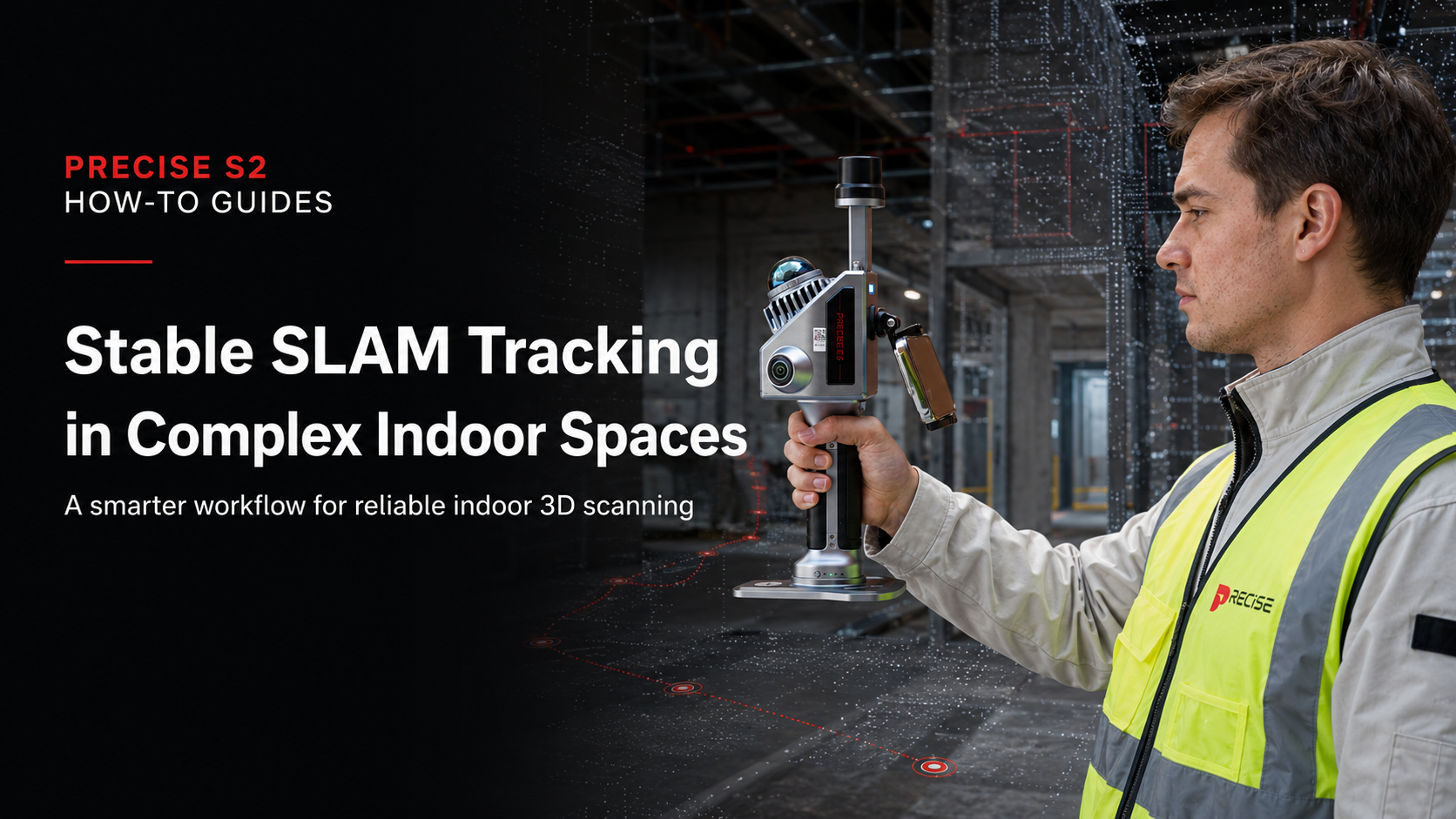
Stable SLAM tracking is essential for capturing reliable indoor 3D scanning data in complex environments with dense structures, narrow passages, repetitive layouts, and limited visibility.
From industrial facilities and mechanical rooms to multi-level interiors, real-world scanning scenarios often include:
- Dense structures
- Narrow passages
- Repetitive layouts
- Limited visibility
- Occlusions and obstructions
- Complex transitions between spaces
These conditions make one thing particularly challenging:
Maintaining stable SLAM tracking throughout the entire scan.
When tracking becomes unstable, the result is not just a small field issue. It can affect the quality and reliability of the entire dataset.
Common problems may include:
- Misalignment
- Drift
- Incomplete reconstruction
- Inconsistent point cloud structure
- More rework during processing
This article explains how to maintain stable SLAM tracking in complex indoor environments, and how to reduce the risk of tracking failure during capture.
Why SLAM Tracking Becomes Unstable Indoors
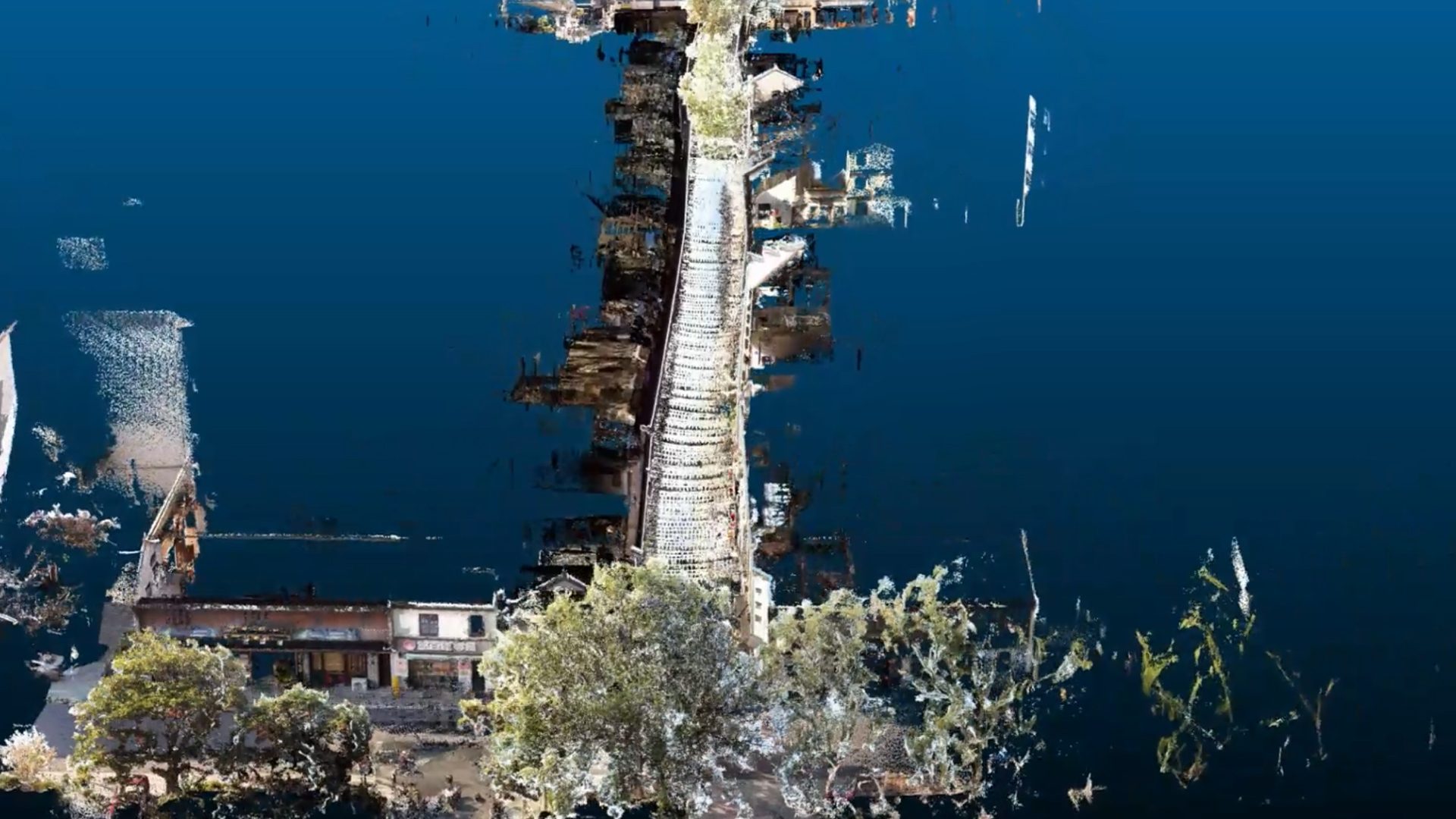
SLAM-based scanning relies on continuous positioning and environmental understanding.
In complex indoor scenes, several factors can disrupt this process and make the scan less reliable.
1. Repetitive Geometry
Many indoor environments contain similar structures that repeat across the space.
Examples include:
- Long corridors
- Similar walls
- Repeated doors
- Industrial layouts
- Similar rooms or sections
- Uniform ceilings or floors
When the environment lacks enough unique features, it becomes harder for the system to maintain orientation.
This may increase the risk of drift, misalignment, or reduced trajectory confidence.
2. Occlusions and Obstructions
Indoor spaces often contain objects that block the scanning view.
Common examples include:
- Equipment
- Furniture
- Walls and partitions
- Storage items
- Pipes, columns, or structural elements
- Narrow passages
These obstructions can reduce visible features, interrupt trajectory continuity, and create gaps in the captured data.
In complex spaces, the operator must move carefully to maintain enough environmental reference during scanning.
3. Abrupt Movement
Sudden motion changes can affect SLAM tracking stability.
This includes:
- Fast turns
- Rapid rotations
- Sudden stops
- Irregular walking speed
- Unstable device orientation
When movement becomes unpredictable, the system may have less reliable information for trajectory estimation.
This can lead to tracking loss, reduced alignment accuracy, or inconsistent point cloud structure.
4. Fragmented Scanning Paths
A poorly planned scanning route can also increase tracking risk.
Disconnected or fragmented paths may:
- Break trajectory continuity
- Increase alignment complexity
- Introduce drift between sections
- Make transitions harder to verify
- Create uncertainty during post-processing
For complex indoor environments, route planning is not just about coverage. It is also about preserving spatial continuity throughout the scan.
A Better Approach: Maintain Continuity and Feature Awareness
Stable SLAM tracking is not only about device capability.
It also depends on how the scan is executed.
The core idea is simple:
Maintain continuous motion and consistent environmental reference throughout the scan.
This means operators should focus on:
- Planning paths that preserve spatial context
- Avoiding unnecessary interruptions
- Capturing enough recognizable environmental features
- Moving smoothly through transitions
- Using real-time feedback to detect problems early
A stable workflow helps the system maintain better trajectory awareness from the beginning of the scan to the final dataset.
Key Execution Steps
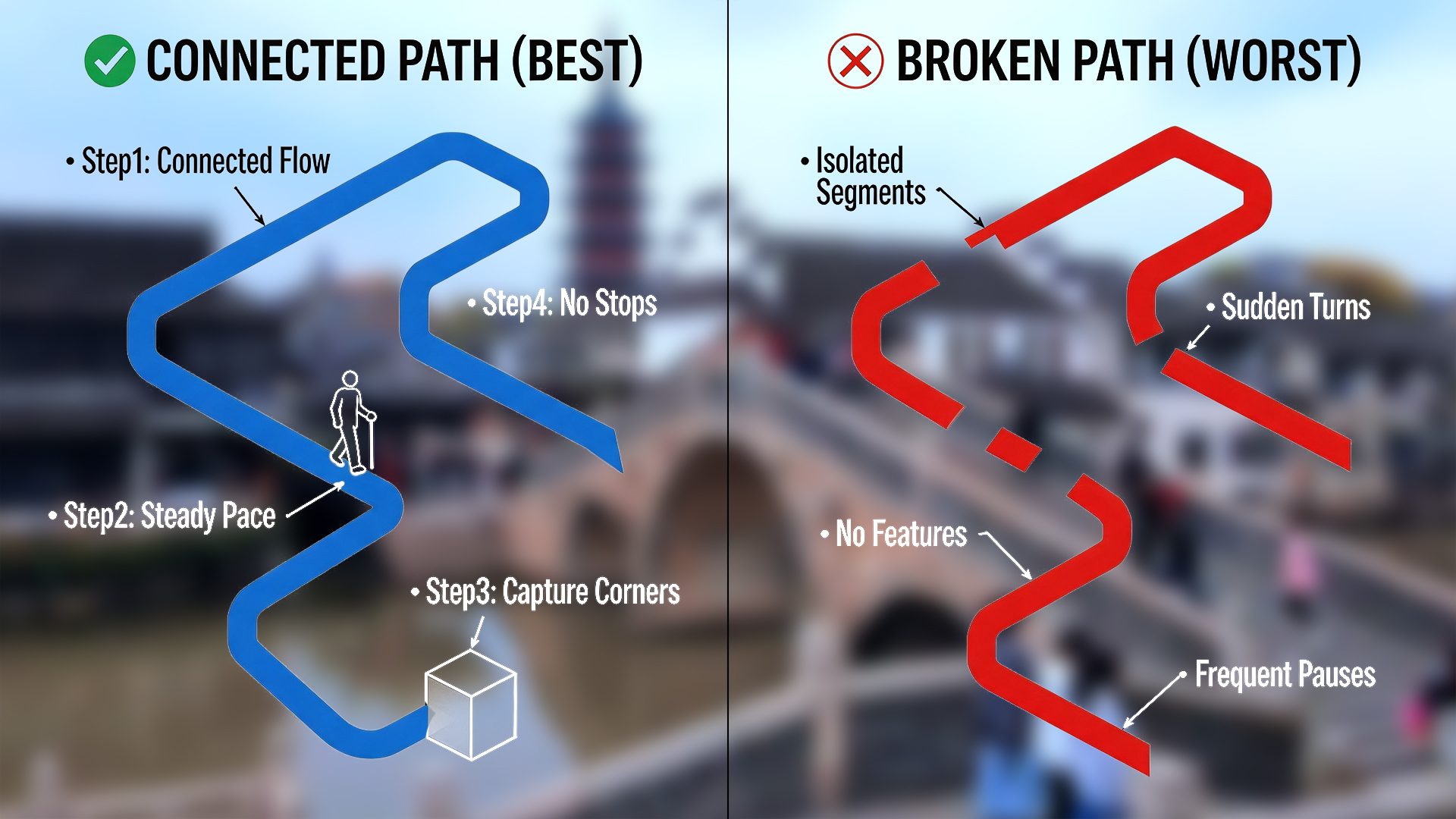
Step 1: Plan a Connected Scanning Path
Before starting, define a logical route through the indoor space.
A connected scanning path should:
- Link all required areas in a clear sequence
- Avoid isolated scan segments
- Include smooth transitions between rooms
- Maintain overlap when moving between spaces
- Reduce unnecessary backtracking
- Keep the operator aware of the full spatial structure
A connected path helps maintain trajectory consistency.
This is especially important in multi-room interiors, industrial spaces, and areas with limited visual reference.
Step 2: Maintain Smooth and Controlled Movement
To improve tracking stability, movement should remain smooth, steady, and predictable.
During scanning, operators should:
- Walk at a steady pace
- Avoid sudden turns
- Avoid rapid rotations
- Keep device orientation stable
- Move carefully through narrow spaces
- Slow down around corners and transitions
Stable movement allows the system to continuously interpret spatial changes.
In complex indoor environments, the operator’s movement pattern can directly affect whether the final point cloud remains consistent.
Step 3: Increase Feature Visibility in Weak Areas
Some indoor areas provide fewer useful features for tracking.
This may happen in:
- Long corridors
- Plain walls
- Repetitive rooms
- Empty interior spaces
- Uniform ceilings
- Similar structural layouts
In these weak-feature areas, operators can improve tracking stability by slightly adjusting the scanning path.
For example:
- Include corners in the scan path
- Capture objects or structural variations
- Avoid long featureless passes when possible
- Move closer to areas with distinguishable geometry
- Use transition zones to maintain spatial reference
The goal is to help the system maintain orientation by giving it more useful environmental information.
Step 4: Minimize Interruptions During Scanning
Frequent stops or pauses can interrupt scanning continuity.
They may also increase the risk of drift, alignment uncertainty, or re-initialization.
To maintain a more stable workflow:
- Avoid unnecessary stops
- Reduce repeated device adjustments
- Keep the route continuous
- Avoid breaking the scan into too many segments
- Complete transitions smoothly whenever possible
For complex indoor scanning, continuity is one of the most important factors in reliable SLAM performance.
Step 5: Use Real-Time Feedback to Detect Instability
Real-time feedback helps operators identify potential issues before they become serious problems.
A real-time point cloud preview can help detect:
- Misalignment trends
- Sparse areas
- Inconsistent point cloud sections
- Missing coverage
- Possible tracking instability
- Areas that require immediate correction
Early detection allows the operator to adjust movement, improve coverage, or revisit a weak section while still on site.
This reduces the risk of discovering tracking problems only after processing.
What Affects SLAM Tracking Stability
Even with the right workflow, several factors can influence SLAM tracking performance.
Feature Density
More distinguishable features generally improve tracking reliability.
Complex but recognizable geometry can help the system maintain orientation more effectively than long, plain, repetitive spaces.
Sensor Fusion Quality
Sensor fusion plays an important role in difficult indoor environments.
A system that combines LiDAR, vision, and IMU data can improve tracking robustness by using multiple sources of spatial and motion information.
This is especially valuable when one source becomes less reliable due to weak features, occlusions, or lighting changes.
Motion Consistency
Irregular movement introduces uncertainty into trajectory estimation.
Smooth walking speed, stable orientation, and controlled turns help maintain more consistent tracking throughout the scan.
Environmental Complexity
Highly cluttered or highly repetitive spaces both require careful execution.
Clutter can block visibility and create occlusions, while repetitive layouts can reduce the number of unique references available for tracking.
In both cases, the operator should plan a route that preserves spatial context and allows real-time checking.
Why Integrated SLAM Systems Perform Better in Complex Environments
Modern handheld scanning systems are designed to improve tracking stability through sensor integration.
An integrated SLAM system may combine:
- LiDAR for consistent geometric reference
- Vision systems for feature recognition
- IMU for motion tracking
- Real-time processing for trajectory awareness
- Live point cloud preview for immediate validation
When these components work together, tracking becomes more resilient.
In practical use, this can help:
- Reduce drift
- Improve trajectory continuity
- Maintain more stable alignment
- Make complex environments more manageable
- Reduce the need for repeated scanning attempts
- Improve confidence before leaving the site
For complex indoor environments, this integrated approach helps operators complete scans that would otherwise be more difficult, slower, or less predictable.
Where Stable SLAM Tracking Matters Most
Stable SLAM tracking is especially important in environments where the scanning route is complex and the final dataset must remain consistent.
Typical application scenarios include:
- Industrial facilities
- Plant environments
- Mechanical rooms
- Equipment rooms
- Multi-room interiors
- Multi-level interiors
- Large indoor spaces with repetitive layouts
- Commercial building documentation
- Renovation and as-built projects
- Environments with limited GNSS availability
In these scenarios, tracking stability directly determines whether a scan is usable.
If the trajectory is unstable, the final output may require additional correction, repeated scanning, or even a return visit.

Conclusion
Stable SLAM tracking is not achieved by hardware alone.
It is achieved through a combination of system capability and workflow discipline.
By focusing on continuous movement, connected path planning, feature awareness, and real-time validation, operators can significantly improve scanning reliability in complex indoor environments.
For indoor 3D scanning projects, the goal is not only to complete the scan.
It is to ensure that the data remains consistent from start to finish.
A stable SLAM workflow helps teams reduce drift, avoid misalignment, improve point cloud reliability, and deliver more dependable results in challenging indoor environments.