
Introduction
Total station workflow efficiency is becoming increasingly important in construction layout, where crews need to maintain speed, accuracy, and continuity under real job-site pressure.
Construction layout is rarely limited by measurement accuracy alone. In real job sites, the real bottleneck is often workflow friction — switching between tools, rechecking data, handling interruptions, and adapting to constantly changing site conditions.
For crews working under time pressure, even small inefficiencies in total station operation can accumulate into hours of lost productivity over a single project.
This raises a practical question:
How can total station workflows be streamlined to maintain both speed and reliability in complex construction environments?

Why Conventional Total Station Workflows Slow Crews Down
Traditional total station workflows were designed around controlled environments — not today’s fast-moving construction sites.
In practice, crews often face several common workflow challenges:
- Frequent workflow interruptions
Switching between data collectors, software systems, and manual inputs can slow down the entire layout process. - Limited flexibility in data handling
Closed systems may make importing, exporting, or syncing project data more time-consuming. - Operational complexity
Complicated interfaces and workflows increase the learning curve for new operators and multi-team collaboration. - Reduced efficiency under field pressure
Small delays during setup, point selection, or data verification can quickly accumulate on busy job sites.
These issues do not necessarily affect measurement accuracy directly — but they significantly affect how fast and smoothly fieldwork can be completed.
A More Efficient Workflow Logic
Improving total station efficiency is not simply about working faster at each individual step.
It is about reducing friction across the entire workflow.
A more effective approach focuses on three principles:
1. Minimize Tool Switching
Keeping data handling, computation, and control within one unified environment helps reduce unnecessary transitions between devices and software.
2. Reduce Cognitive Load
An intuitive workflow allows operators to spend less time interpreting interfaces and more time completing layout tasks.
3. Maintain Continuity in the Field
A smooth data flow from setup to execution helps reduce repeated checks, manual input, and operational interruptions.
This is where modern Android-based total stations introduce a different and more practical operational model.
Key Execution Steps for a More Efficient Workflow
1. Start with a Unified Data Environment
Before entering the field, project data should already be structured and accessible within the same platform.
Instead of relying on external controllers or fragmented software, crews can improve efficiency by:
- Using systems that support direct data import and onboard management
- Keeping coordinate files, design data, and layout plans in one environment
- Reducing the need to move between separate devices during setup
This helps shorten preparation time and avoids early-stage delays before layout work begins.
2. Simplify On-Site Interaction
During field operation, efficiency depends heavily on how quickly an operator can:
- Select points
- Verify positions
- Adjust measurements
- Move between layout tasks
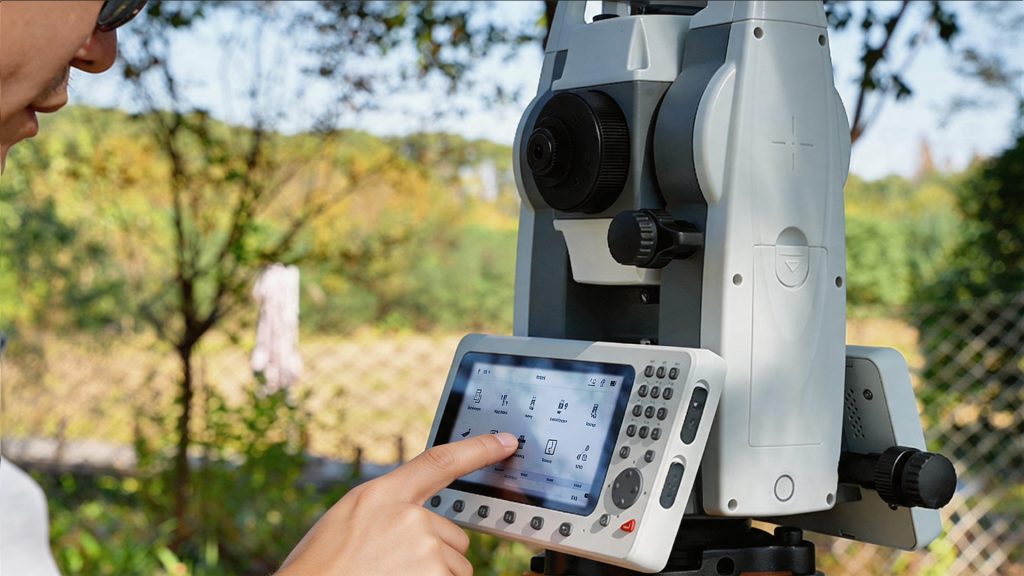
A touchscreen interface with familiar mobile-style interaction logic can help reduce unnecessary steps.
For example, Android-based systems allow operators to access project files, navigate between functions, and visualize tasks more easily.
This shortens the time between decision and execution — especially on busy construction sites where every minute matters.
3. Maintain a Continuous Workflow Without Interruptions
One of the biggest sources of inefficiency in construction layout is workflow interruption.
These interruptions often come from:
- Re-entering data
- Switching devices
- Rechecking measurements due to uncertainty
- Moving between disconnected software tools
A more efficient workflow should support:
- Continuous operation from setup to layout
- Minimal repeated input
- Stable data handling throughout the process
- Fewer unnecessary pauses during field execution
When the workflow remains continuous, operators can stay focused on the task instead of constantly managing the process around it.
4. Reduce the Learning Curve Across Teams
On large construction sites, multiple operators may use the same equipment.
If the system requires extensive training, several problems may appear:
- Fieldwork slows down
- Operation becomes inconsistent
- New users make more mistakes
- Collaboration between teams becomes less efficient
Using an open and familiar operating system helps reduce onboarding time.
For teams working under project pressure, a more intuitive system makes it easier to maintain consistent operation across different users and job conditions.
What Affects Workflow Efficiency in Practice
Even with optimized tools, field workflow performance still depends on real job-site conditions.
Several factors should be considered:
Data Readiness Before Deployment
Poorly prepared files can still create delays, regardless of device capability.
Clear coordinate files, organized layout data, and complete project information help field crews start faster.
Operator Familiarity
Efficient systems reduce learning time, but consistent operation still depends on user familiarity and standardized workflows.
Site Complexity
Dense construction environments require clearer workflows, not just better hardware.
A complicated site demands a system that helps operators move through tasks logically and efficiently.
Environmental Factors
Lighting, terrain, obstructions, and site movement can influence operational speed.
Recognizing these factors helps crews apply the right workflow adjustments in the field.
Why This Workflow Fits Modern Construction Jobs
Modern construction environments demand more than accuracy.
They require adaptability, speed, and practical field efficiency.
The PRECISE T3 Total Station supports this shift with a workflow approach designed for real job-site conditions.
Key advantages include:
- Android-based open system
Supports flexible software use and easier data integration. - Integrated interface and control
Reduces dependence on external devices and fragmented operation. - Practical field efficiency
Focuses on minimizing interruptions, simplifying interaction, and improving workflow continuity.
In high-pressure layout scenarios, this kind of system helps crews maintain consistent performance across changing conditions.
Conclusion
Improving total station efficiency is not about accelerating individual steps.
It is about building a smoother, more continuous workflow from start to finish.
By reducing tool switching, simplifying interaction, and maintaining data continuity, crews can:
- Work faster without rushing
- Reduce rework caused by interruptions
- Maintain accuracy under pressure
- Improve consistency across teams and job sites
In modern construction layout, the most effective workflows are not always the most complex.
They are the ones that remove friction where it matters most.