
In field surveying, hard-to-reach survey points often create delays by increasing movement, disrupting workflow, and adding unnecessary risk.
Some points are straightforward to access but still require precision. Others may be simple in geometry, yet difficult or unsafe to reach in practice. On real projects, hard-to-reach points are common and often appear in places such as excavation edges, drainage channels, fenced boundaries, roadside features, or areas close to active machinery and unstable ground.
In these situations, the challenge is not just about accuracy. It is about completing the task efficiently without interrupting the overall workflow.
This article explains how survey teams can handle hard-to-reach points more efficiently by improving workflow strategy rather than relying only on conventional positioning methods.
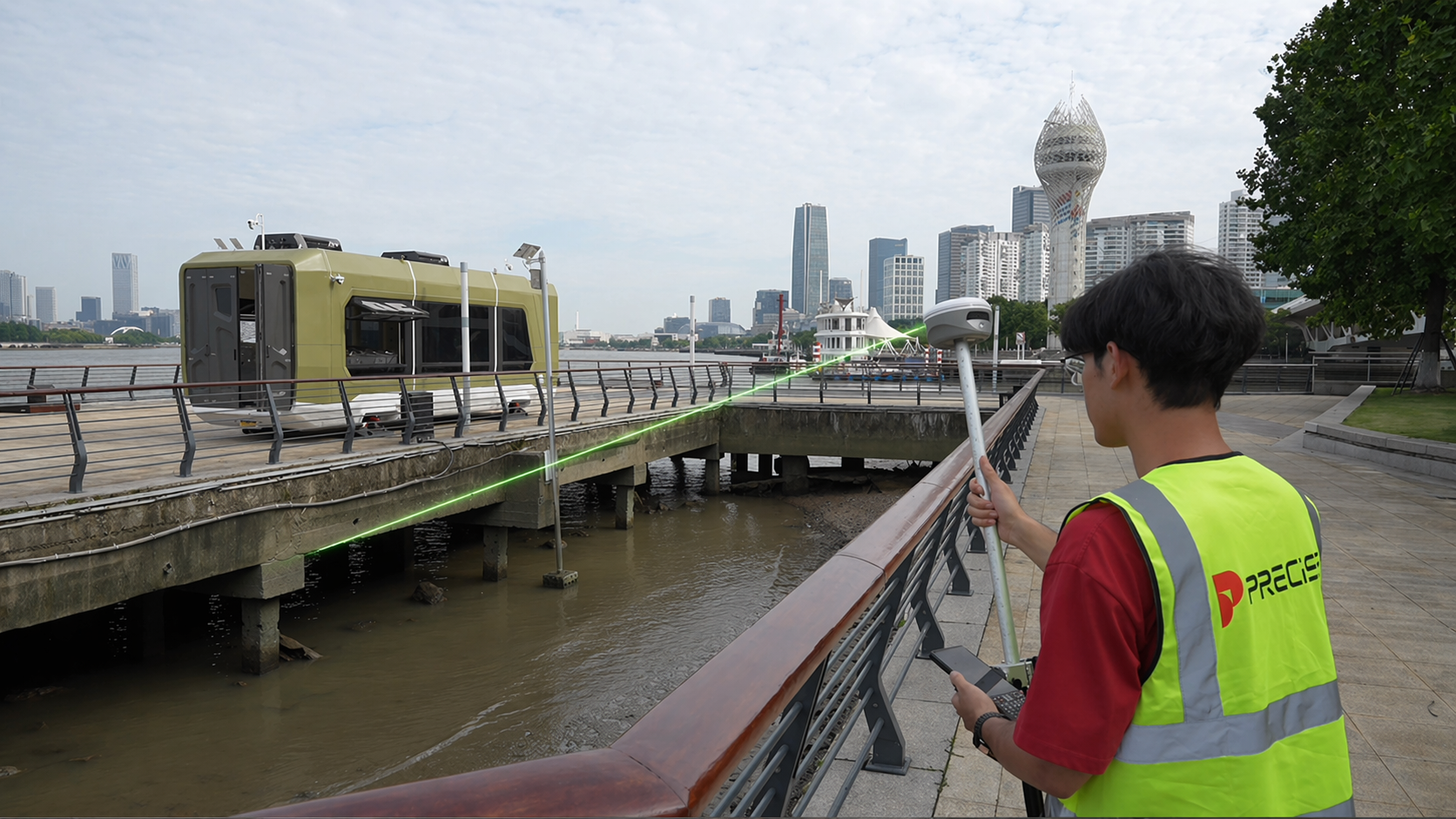
Why Hard-to-Reach Points Slow Down Field Work
In many traditional workflows, the default solution is simple: move closer to the point.
While this seems reasonable, it often creates unnecessary inefficiencies in real-world field conditions. Surveyors may need to reposition repeatedly, take longer walking paths, work from inefficient angles, or interrupt their measurement rhythm. In some cases, they may also be forced into restricted, unstable, or unsafe areas.
When this happens across multiple points in a single project, the time loss becomes cumulative. The problem is no longer limited to one difficult point. It affects the pace, continuity, and efficiency of the entire job.
That is why hard-to-reach points should not be treated as isolated measurement problems. They should be approached as a workflow efficiency issue.
A More Efficient Approach: Reduce Physical Dependency
A more effective strategy is to reduce the need for direct occupation while still maintaining survey-grade results.
Instead of forcing every point into a “reach and measure” process, a better workflow allows surveyors to measure from practical positions, orient more flexibly toward the target, and move continuously without unnecessary stops.
This is where an integrated workflow becomes especially valuable. By combining remote measurement, visual guidance, and tilt flexibility, surveyors can work more naturally and efficiently in complex environments.
With a device such as the PRECISE X7, this workflow can include:
- Laser-assisted measurement to reduce the need to physically occupy the point
- Visual stakeout to improve spatial understanding in complex environments
- Tilt-supported surveying to maintain productivity without strict pole positioning
The goal is not to replace traditional methods entirely. The goal is to avoid unnecessary effort where it adds no real value to the job.
Step-by-Step Workflow for Hard-to-Reach Survey Points
Step 1: Evaluate Access Before Moving
Before approaching the point, first assess the situation carefully.
Ask yourself:
- Is direct access actually necessary?
- Will approaching the point add time or increase risk?
- Can the point be measured accurately from a stable nearby position?
This first decision can often eliminate unnecessary movement before it starts.
Step 2: Choose a Stable Working Position
Rather than moving directly toward the target, choose a position that supports both efficiency and measurement confidence.
A good working position should provide:
- Clear visibility toward the target
- Stable GNSS conditions
- Enough space to work safely and naturally
- Distance from restricted or hazardous areas
A stable position often improves both workflow continuity and operator confidence.
Step 3: Use Remote Measurement for Target Acquisition
For points that are difficult, inefficient, or unsafe to reach, remote measurement can significantly improve workflow.
When using laser-assisted measurement:
- Capture the target point from a practical distance
- Maintain clear alignment with the target surface
- Avoid excessive repositioning or unnecessary detours
This helps reduce the time spent navigating obstacles while keeping the measurement process efficient.
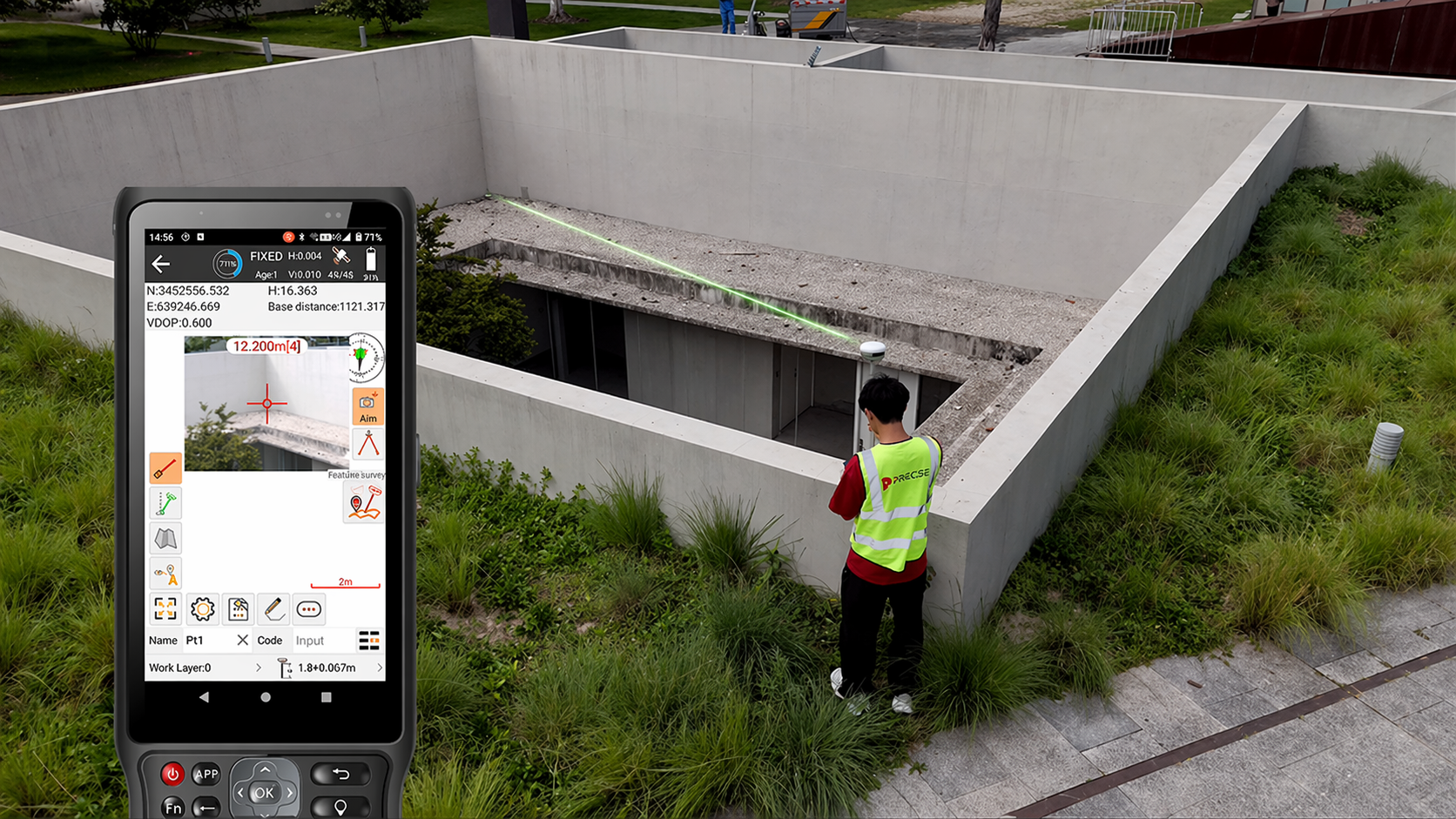
Step 4: Improve Orientation with Visual Guidance
In dense, cluttered, or visually repetitive environments, identifying the correct point can take more time than expected.
Visual stakeout helps by allowing the operator to understand the target location more intuitively in relation to surrounding features. This can:
- Reduce time spent interpreting coordinate directions
- Minimize hesitation when locating the correct target
- Improve decision-making in partially obstructed or repetitive environments
This is especially useful on construction sites, roadside projects, and other areas with multiple similar features.
Step 5: Maintain Workflow Continuity
One of the biggest efficiency gains comes from continuity rather than raw speed.
To keep the workflow smooth:
- Avoid switching methods unless it is truly necessary
- Minimize repeated setup changes
- Keep movement between points consistent and efficient
In practice, productivity often depends more on maintaining momentum than on measuring each point as quickly as possible in isolation.
Step 6: Apply Tilt Flexibility When Needed
In real field conditions, perfect vertical pole positioning is not always practical.
Uneven ground, boundary constraints, and limited access can make conventional positioning inefficient. Tilt-supported surveying allows operators to work more naturally by reducing the need to reposition solely to maintain vertical alignment.
This helps surveyors:
- Maintain productivity in constrained environments
- Reduce interruptions caused by terrain or access limitations
- Continue working efficiently without compromising the overall workflow
What Affects Results in This Workflow
Even with an improved workflow, results still depend on several practical factors.
Key considerations include:
- GNSS stability: Ensure positioning is reliable before taking measurements
- Target visibility: Avoid unclear surfaces or ambiguous reference points
- Operator judgment: Choose the most appropriate method for the specific site condition
- Environmental complexity: Adjust the workflow according to visibility, obstacles, and access limitations
This workflow is flexible, but it is not automatic. Good judgment and correct application remain essential.
When This Workflow Is Most Effective
This approach is especially effective in workflows involving:
- Construction layout near obstacles
- Topographic detail collection in restricted zones
- Roadside and infrastructure projects
- Excavation and earthwork environments
- Fast verification tasks on active job sites
In these scenarios, reducing unnecessary movement can have a direct and measurable impact on field productivity.
Conclusion
Hard-to-reach points are not difficult only because of where they are located. They are difficult because they interrupt workflow.
An efficient survey process does not depend on physically reaching every point. It depends on selecting the right method for each condition.
By combining remote measurement, visual guidance, and flexible operation, surveyors can:
- Reduce unnecessary movement
- Improve workflow continuity
- Maintain accuracy without sacrificing efficiency
In modern field environments, productivity is not defined by how much effort is applied. It is defined by how little disruption is needed to complete the job.