
Introduction
Headland turning efficiency in farming has become an important factor in improving overall field productivity.
Headlands, where machines transition between passes, are often overlooked as a source of inefficiency. Yet they are one of the most repeated actions in any field workflow.
When turning is slow, inconsistent, or overly manual, it leads to:
- Lost operational time
- Increased fuel consumption
- Irregular pass alignment
- Operator fatigue
Improving headland efficiency is therefore not a minor optimization. It is a direct way to increase overall field productivity.
Why Conventional Turning Workflows Are Inefficient
Headland turning efficiency in farming is becoming increasingly important as farms look for practical ways to reduce downtime and improve field productivity.
The operator must:
- Decide when to disengage the current pass
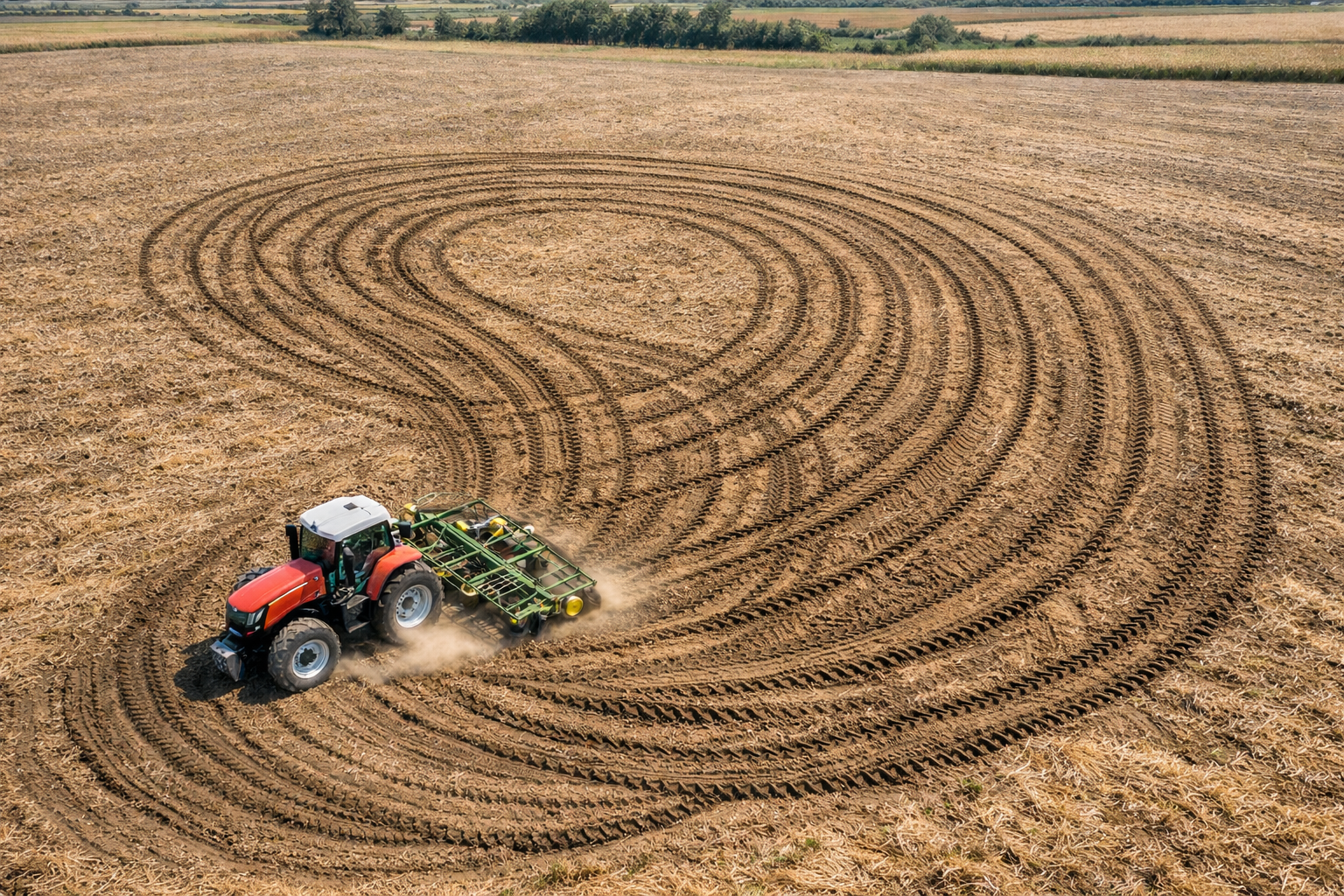
- Manually steer through the turn
- Estimate the correct entry point for the next pass
- Re-align the machine before resuming work
This process is repeated dozens, or even hundreds, of times per day.
Common issues include:
- Turning too wide, wasting time and fuel
- Turning too tight, causing alignment errors
- Inconsistent re-entry spacing
- Hesitation before starting the next pass
Over time, these small inefficiencies accumulate into significant productivity loss.
A Better Workflow Logic
Instead of treating turning as a manual skill, a more effective approach is to treat it as a repeatable, optimizable process.
This requires shifting from:
“Operator-controlled turning”
to
“Predefined, automated turning paths”
The goal is to:
- Standardize every turn
- Minimize unnecessary movement
- Ensure accurate re-entry into the next pass
When turning becomes predictable and consistent, the entire workflow becomes smoother.
Key Execution Steps
1. Define Headland Zones Clearly
Before starting field operations:
- Identify headland areas where turning will occur
- Ensure boundaries are clearly mapped
- Maintain sufficient turning space
Clear definition allows the system to anticipate transitions rather than react to them.
2. Preconfigure Turning Behavior
Instead of relying on real-time manual decisions:
- Set turning parameters in advance
- Define turning radius and path style
- Align turning logic with implement width and field layout
This transforms turning from an improvised action into a planned movement.
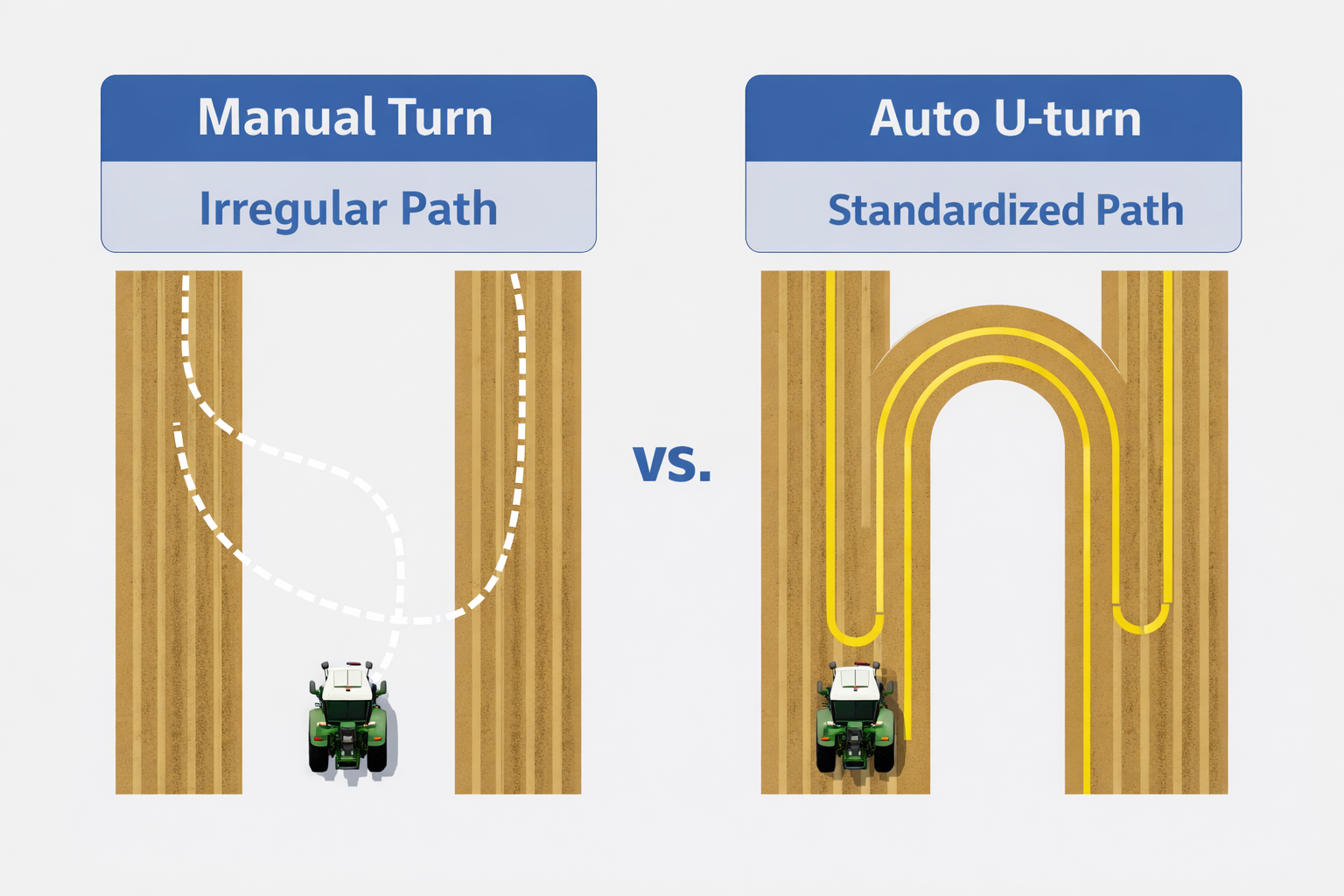
3. Enable Automated U-Turn Execution
During operation:
- The system handles steering through the turn
- The machine follows a consistent path every time
- Operator input is minimized
This is especially effective in:
- Large fields with repetitive passes
- Long working hours where fatigue affects performance
- Situations requiring high consistency
4. Ensure Accurate Re-Entry into the Next Pass
One of the biggest inefficiencies in manual turning is poor alignment after the turn.
With an optimized workflow:
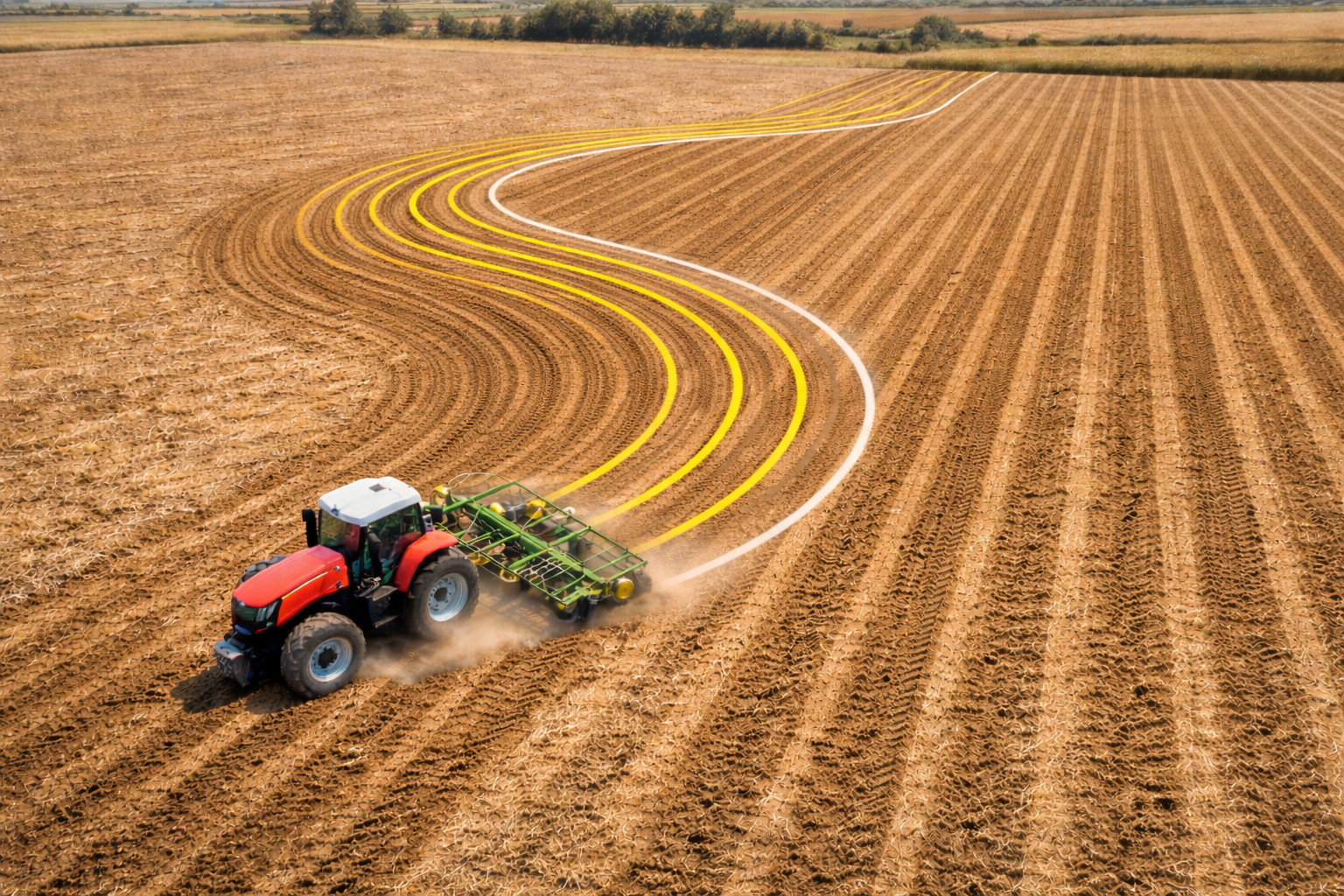
- The system aligns the machine precisely with the next pass
- No hesitation is needed before resuming operation
- Overlap and skips are minimized
This improves both speed and accuracy.
5. Reduce Unnecessary Turning Distance
Not all turns are equal.
An optimized turning workflow focuses on:
- Minimizing travel distance during turns
- Avoiding excessive loops or wide arcs
- Maintaining smooth motion without stopping
Reducing even small amounts of unnecessary movement per turn can result in measurable time savings across a full field.
What Affects the Results
The effectiveness of headland optimization depends on several factors:
GNSS accuracy and responsiveness
Precise positioning ensures correct turn execution and re-entry.
Field layout and available space
Tight headlands may require adjusted turning strategies.
Machine dynamics
Steering response and implement size influence turning performance.
Speed control
Excessive speed can reduce turning precision.
Balancing these factors helps ensure both efficiency and reliability.
Why This Workflow Fits Modern Farming Operations
As farms aim to increase productivity without increasing labor or equipment, optimizing every part of the workflow becomes essential, including turning.
The PRECISE A Pro supports this through:
- Smart U-turn functionality
- Automated steering control
- Integration with overall guidance and implement systems
This allows turning to become a consistent, optimized part of the operation rather than a repeated manual task.
By reducing turning distance by up to 30%, according to product positioning, and standardizing execution, operators can maintain rhythm, reduce fatigue, and complete more work in less time.
Conclusion
Field efficiency is not defined only by how straight a machine drives. It is also defined by how efficiently it turns.
By optimizing headland workflows:
- Downtime between passes is reduced
- Turning becomes faster and more consistent
- Operator workload decreases
- Overall productivity improves
In high-frequency operations, improving a repeated action like turning can have a disproportionately large impact.
And in modern precision farming, those incremental gains define real efficiency.