
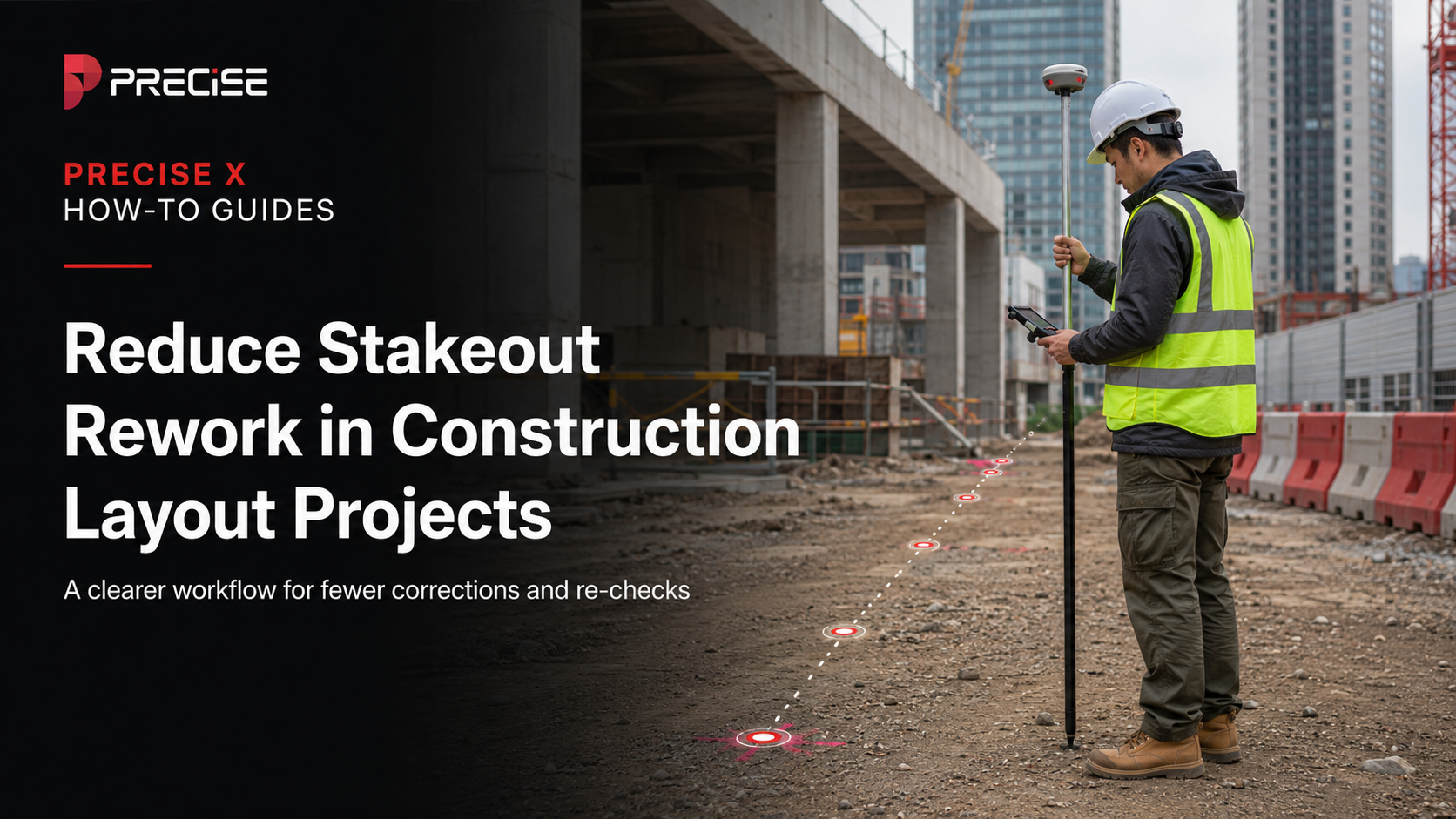
Reducing stakeout rework is essential in construction layout projects, where repeated adjustments, corrections, and re-checks can quickly increase time and labor costs.
In many cases, the problem is not inaccurate measurement itself. Instead, rework often comes from repeated adjustments, corrections, and re-checks during the stakeout process. These small inefficiencies accumulate over time, leading to delays, higher labor costs, and reduced confidence in layout results.
Reducing stakeout rework is not only about improving accuracy. It is about improving the entire workflow—from positioning and guidance to verification and execution.
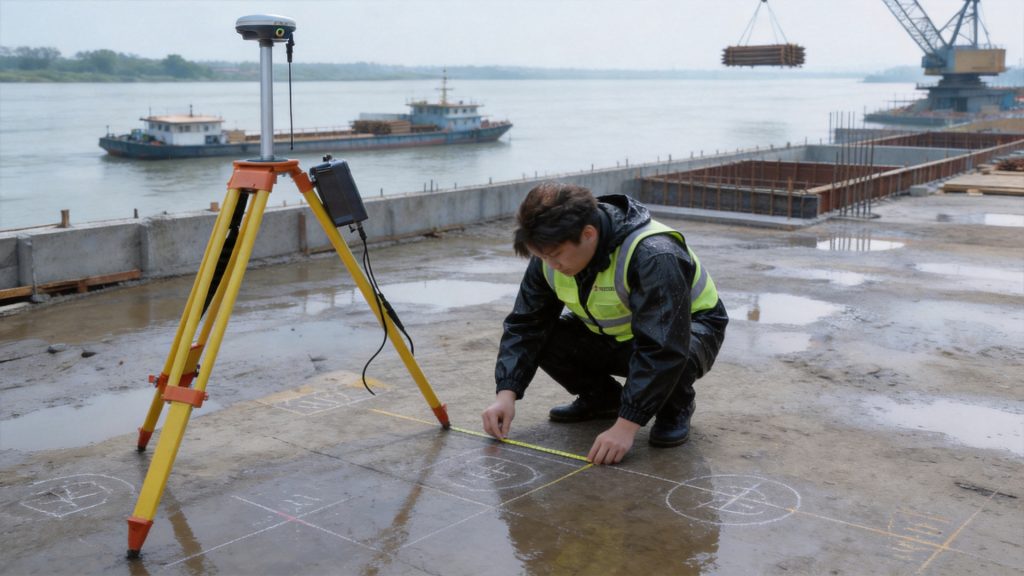
Why Rework Happens in GNSS Stakeout
Rework in construction layout projects usually comes from workflow gaps rather than technical limitations.
Even when GNSS accuracy is sufficient, surveyors may still face repeated corrections during field operation. This is especially common in complex construction sites where movement paths, visibility, and positioning conditions are not always ideal.
Common causes of stakeout rework include:
- Misinterpretation of stakeout direction
- Repeated alignment adjustments near the target point
- Loss of positioning stability during operation
- Inconsistent workflows across different operators or teams
- Poor visibility of the final alignment
- Unclear confirmation before marking the point
These factors can lead to hesitation, repeated checking, and unnecessary re-stakeout.
For construction layout, every repeated correction costs time. When this happens across multiple points and multiple teams, the impact on overall project efficiency becomes much larger.
A More Reliable Stakeout Workflow Approach
To reduce rework, the stakeout workflow needs to shift from a repeated “measure → adjust → confirm” process to a more continuous and confident operation.
An improved GNSS stakeout workflow should focus on three key goals:
- Clear directional understanding before final positioning
- Consistent positioning stability throughout the task
- Reduced interruption during movement and alignment
With this approach, operators can move toward the target point with greater confidence and fewer corrections.
Instead of stopping repeatedly to confirm every adjustment, the workflow becomes smoother, more intuitive, and easier to control.
Step 1: Start with a Stable GNSS Fix
Before initiating stakeout, the first step is to ensure that the positioning solution is stable and consistent.
A strong initial GNSS fix helps reduce:
- Downstream corrections
- Misalignment during approach
- Unnecessary repeated verification
- Workflow interruption caused by unstable positioning
In construction layout projects, consistency at the beginning directly affects the entire stakeout process.
If the positioning status is unstable, operators may spend extra time correcting movement direction or verifying whether the target point has been approached correctly. This increases the risk of repeated work.
Before moving toward the point, surveyors should confirm that the RTK status is reliable and that the surrounding environment is suitable for continuous operation.
Step 2: Improve Directional Clarity During Approach
One of the main causes of rework in stakeout tasks is uncertainty when approaching the target point.
When operators rely only on numerical feedback such as distance and direction, they may need to stop frequently, rotate, re-check, and adjust their movement path. This slows down the workflow and increases the chance of overcorrection.
Using more intuitive guidance methods can help operators:
- Move more directly toward the point
- Avoid unnecessary backtracking
- Reduce hesitation during final positioning
- Improve confidence before marking the location
Clear directional feedback shortens the path to completion.
In complex construction environments, visual stakeout guidance can be especially useful because it helps operators understand where to move, how to approach the point, and when to make final adjustments.
Step 3: Maintain Continuous Movement Without Frequent Stops
Frequent stopping is another common source of stakeout inefficiency.
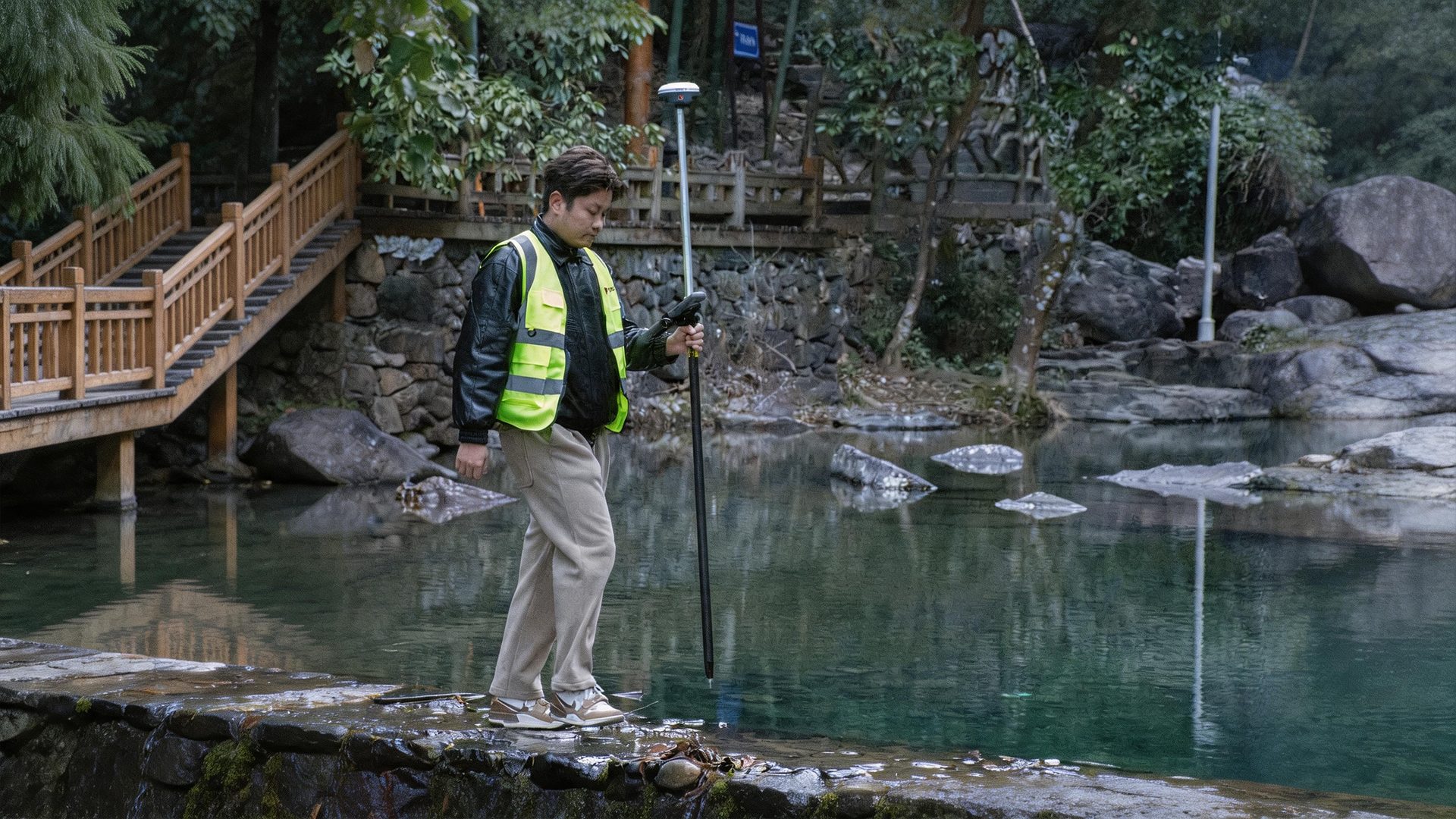
In traditional workflows, operators may need to stop repeatedly to re-level the pole, check alignment, confirm direction, and adjust position. Each interruption breaks the workflow rhythm and increases the possibility of small accumulated deviations.
A smoother stakeout workflow allows operators to:
- Move continuously toward the point
- Adjust naturally without full resets
- Maintain a more consistent operation rhythm
- Reduce repeated stopping near the target location
Reducing interruptions is key to minimizing accumulated errors and unnecessary rework.
With tilt-supported operation, surveyors can work more flexibly around obstacles, structures, boundaries, or uneven ground. This helps maintain workflow continuity in real construction layout conditions.
Step 4: Combine Visual Confirmation with Positioning Data
Rework often happens when operators lack confidence in the final point.
Positioning data provides accuracy, but visual confirmation helps operators understand and verify the point more intuitively during field execution.
By combining positioning data with visual confirmation, teams can:
- Validate alignment more quickly
- Reduce reliance on repeated checks
- Improve confidence in the final mark
- Lower the need for re-stakeout
This combination is especially valuable in construction layout projects, where crews often need to complete multiple points efficiently and consistently.
When operators can clearly see where they are moving and how the point relates to the site environment, the chance of unnecessary correction becomes much lower.
What Affects Rework in Stakeout Tasks
Even with an optimized workflow, several real-world factors can still contribute to stakeout rework.
Important factors include:
- Signal obstruction and multipath effects
- Inconsistent RTK initialization
- Operator experience and workflow discipline
- Site complexity, such as dense structures, boundaries, and elevation changes
- Poor communication between team members
- Inconsistent marking or verification standards
In construction environments, site conditions change constantly. Equipment, materials, machinery, temporary structures, and partially blocked sky views may all affect GNSS operation.
Poor coordination between team members can also lead to duplicated work or miscommunication. For this reason, reducing rework requires both reliable equipment and a standardized workflow.
Recognizing these variables is essential for minimizing unnecessary corrections.
Why This Workflow Works in Real Projects
Reducing rework requires more than accuracy. It requires consistency, clarity, and continuity.
Systems like the PRECISE X support this workflow by integrating:
- High-channel GNSS tracking for stable positioning
- Visual stakeout capabilities for clearer directional guidance
- IMU-based tilt functionality for uninterrupted operation
- A practical workflow designed for complex construction layout tasks
This combination helps survey teams complete stakeout tasks with fewer corrections, especially in construction environments where traditional workflows may slow down.
By improving how operators move, confirm, and execute layout points, the workflow becomes more reliable from start to finish.

Conclusion
Rework in stakeout is not inevitable. In many cases, it is the result of fragmented workflows.
By improving positioning stability, enhancing directional clarity, and reducing interruptions, survey teams can significantly lower the need for repeated work.
In the long run, the most efficient construction layout projects are not the ones with the fastest measurements. They are the ones with the fewest corrections.
With a more continuous and confidence-driven GNSS stakeout workflow, survey teams can reduce rework, improve consistency, and complete layout tasks more efficiently.